Shading Windows From the Heat
Short answer
Window shading for heat works best outside the glass: exterior screens, awnings and west-side shade trees stop sunlight before it enters, and new glass should carry an SHGC of 0.23 or lower in the South.
Swelter Almanac, checked against the sources · updated
Points on this page
The forecast in brief
- Windows account for 25–30% of residential heating and cooling energy use (DOE Energy Saver text on South Carolina's state mirror).
- DOE's advice: exterior shades whenever possible, plus awnings and daytime-closed curtains on south- and west-facing windows.
- ENERGY STAR v7 windows for the Southern and South-Central zones must have an SHGC of 0.23 or lower.
- Three trees, two on the west and one on the east, cut annual cooling energy 10–50% in USDA Forest Service modeling.
- A tree on the west side saves about twice as much cooling as one on the east or southwest (USDA Forest Service).
- In a room-air-conditioner sizing, ENERGY STAR adds 10% capacity for a very sunny room and subtracts 10% for a heavily shaded one.
Which window shading blocks the most heat?
Shading on the outside of the glass blocks the most heat, because it stops sunlight before it passes through the window and turns into heat in the room. DOE's Energy Saver text, still published on South Carolina's Energy Saver site, says it is always best to install exterior shades whenever possible.
Inside the window, light colors help. The same DOE guidance suggests white window shades, drapes or blinds to reflect heat away from the house, and closing curtains on south- and west-facing windows during the day. Inside coverings still let the sun heat the glass and the air gap behind them, so treat them as the fallback when exterior shading is not allowed, as in many rentals and condos.
DOE puts windows at 25–30% of residential heating and cooling energy use and notes that about 40% of windows on existing US homes are still single-pane. In a hot climate, much of that is solar gain through glass on the sunny sides of the house, which is why the side matters as much as the product.
| Option | Where it works | What the source says |
|---|---|---|
| Exterior shades and solar screens | Sunlit east, west and south windows | DOE: exterior shades are best whenever possible |
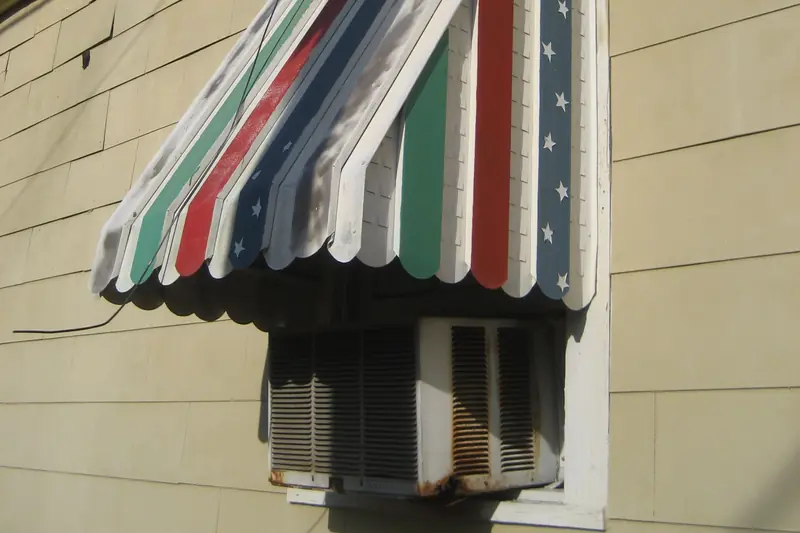
| Awnings | South and west windows | DOE: install awnings on south- and west-facing windows |
| Sun-control window film | South, east and west glass in hot climates | DOE: reduces solar heat gain; films are rated by NFRC |
| White shades, drapes, blinds | Any window, inside | DOE: reflect heat; close by day on south and west |
| Low-SHGC replacement windows | Whole house | ENERGY STAR v7: SHGC 0.23 or lower in the South |
| Shade trees | West side first, then east | USDA: west shade gives the largest savings |
Why do east and west windows matter most?
East and west windows matter most because low morning and afternoon sun strikes them nearly head-on in summer, when you least want the heat. An FSEC design note on east and west shading calls direct sun through east and west windows a major source of heat in buildings, and says Florida's long cooling season makes protecting those walls, windows and sliding glass doors especially important.
West glass is the worst of the pair, since it takes its sun in the late afternoon, on top of a day's built-up heat. The USDA Forest Service research below found the same pattern for trees: shade on the west side saved the most energy in every climate zone it modeled.
South glass comes next; DOE's tips pair awnings and daytime-closed curtains with south- and west-facing windows. If one room is always the hottest, check which way its windows face before blaming the air conditioner; the hot upstairs page covers the attic side of the same problem.
Do solar screens and window film work?
Both work by cutting solar heat at the glass, and both are rated products you can compare. Solar screens are exterior shades, the placement DOE calls best. Window film goes on the glass itself; DOE's text suggests sun-control or reflective film on south-facing windows and, in hot climates, on east-, west- and south-facing windows, and says films are rated by the National Fenestration Rating Council (NFRC).
For screens, shades, blinds and storm windows, the Attachments Energy Rating Council (AERC) certifies energy ratings, and DOE points shoppers to it. Use those ratings rather than a seller's percentage claim; no primary DOE or lab source read for this page put a single savings figure on screens or film.
Renters and condo owners may need approval for anything fixed to the outside of a building. A low-e storm window is another retrofit DOE mentions, saving 12–33% on heating and cooling costs depending on the window already in place.
Window shading figures
- 25–30%Share of home heating and cooling energy tied to windowsDOE Energy Saver (SC mirror)
- 0.23Highest SHGC for ENERGY STAR windows in the SouthENERGY STAR v7
- 10–50%Annual cooling energy cut from three shade treesUSDA Forest Service
- 75%Canopy density for the most effective shade treeUSDA Forest Service
What does SHGC on a window label mean?
SHGC, the solar heat gain coefficient, is the share of the sun's heat a window lets through, and lower is better in a hot climate. The NFRC says low numbers resist solar heat and high numbers allow it, and that in summer a low SHGC helps keep a home cool.
ENERGY STAR sets the bar for the South. Under its Version 7 window specification, windows for the Southern zone need a U-factor of 0.32 or lower and an SHGC of 0.23 or lower; the South-Central zone needs a U-factor of 0.28 or lower and the same 0.23 SHGC. ENERGY STAR windows are tested, certified and verified through NFRC, so the numbers on the NFRC label are the ones to compare.
One limit: DOE notes that the ENERGY STAR criteria do not account for a home's design, such as which way each window faces. When replacing windows, the west and east glass is where a low SHGC earns the most.
How much do shade trees help?
Well-placed shade trees can make a large dent: in USDA Forest Service modeling, three trees (two on the west side and one on the east) reduced annual cooling energy by 10 to 50 percent. The Forest Service study found trees shading the west exposure produced the largest annual and peak savings for every climate zone and insulation level considered.
Placement beats number. Savings from an east or southwest tree were about 50% less than from a tree on the west, and an earlier Forest Service paper lists what makes the best shade tree: west placement, a broad spreading crown, and a dense canopy that blocks 75% or more of the sun. EPA adds that trees and vegetation that directly shade buildings decrease demand for air conditioning.
Trees take years to pay off, so pair them with faster fixes. Exterior screens and awnings work this summer, and closing up the house by day keeps whatever cool you have. In a heat wave, shade alone will not keep a house safe; see heat safety at home for the indoor temperature limits that matter.
How does shade change the A/C you need?
Shade reduces the cooling capacity a room needs. ENERGY STAR's room air conditioner sizing guidance says to reduce capacity by 10% if a room is heavily shaded and increase it by 10% if the room is very sunny.
That is the clearest published measure of how much sun on the glass matters to a single room. It also means shading a west bedroom can be the difference between a unit that copes and one that runs flat out; the room unit sizing page has the full ENERGY STAR chart.
How this page was put together
This page is based on DOE Energy Saver window guidance as republished on South Carolina's state Energy Saver site (the DOE originals were offline), ENERGY STAR's Version 7 window specification (2022) and room air conditioner page, NFRC's label definitions, the AERC home page, an FSEC design note on east and west shading, two USDA Forest Service shade tree studies and EPA's heat island pages, all read in October 2026. Left out: percentage savings for drapes, awnings, screens and film, which could not be confirmed on a live primary page, and any product brands or prices.
More questions
Are solar screens better than blinds?
DOE says exterior shading is best whenever possible, and solar screens sit outside the glass, while blinds sit inside after the sun's heat is already through the window. Blinds still help, especially white ones closed during the day on south and west windows.
Which side of the house should I shade first?
West, then east. USDA Forest Service modeling found west-side shade gave the largest savings in every climate zone, and FSEC singles out east and west glass as a major summer heat source.
What SHGC should I ask for when replacing windows?
In ENERGY STAR's Southern and South-Central zones, 0.23 or lower. Compare the number on each window's NFRC label.
How do I compare two window films?
DOE's text says films are rated by NFRC, and AERC also certifies ratings for window attachments. Compare the rated numbers rather than a seller's savings claim.
What kind of shade tree works best?
The Forest Service lists three traits: placement on the west side, a broad, spreading crown, and a dense canopy that blocks 75% or more of the sunlight.
Is shading worth it with central air running all day?
Yes. Every bit of solar heat kept out is heat the A/C does not have to remove, and ENERGY STAR's own sizing guidance shows a sunny room needs 10% more capacity than an average one.
More on keeping heat out
Back to the Swelter Almanac front page