Thermostat Settings for Hot Summers
Short answer
The best thermostat setting for summer is the warmest one you are comfortable at; ENERGY STAR's starting point is 78°F when you are home, set higher while you sleep or are away.
Swelter Almanac, checked against the sources · updated
This page links to PlumbingSupplyAndMore, owned by the people who run Swelter Almanac. Those links are examples only; no figure here depends on them. About these links
Points on this page
The forecast in brief
- ENERGY STAR's programmable schedule uses 78°F or warmer for cooling when people are home and awake, with a setup of at least 7°F while the house is empty.
- DOE's 2022 Energy Saver Guide does not name a number: it says to set the thermostat "as high as is comfortable" in summer.
- Ceiling fans allow a setting roughly 4°F higher at the same comfort (DOE text on a South Carolina state site), but only if you actually move the dial.
- Building America research found a 2°F setup during peak hours cut yearly cooling energy 2% to 10%; pre-cooling alone rarely saved energy.
- The CDC says fans are not enough once it is above 90°F indoors; at that point the setting matters less than getting to air conditioning.
What is the best thermostat setting for summer?
The best thermostat setting for summer is the highest one the people in the house find comfortable, and 78°F is a sensible place to start. That number comes from ENERGY STAR's programmable thermostat schedule, which lists 78°F or warmer for the wake and evening periods. The Department of Energy's 2022 Energy Saver Guide puts it more loosely: as high as is comfortable when you are home and awake, higher when asleep or away.
Treat 78°F as a starting point, not a rule. DOE said plainly in a 2019 statement that Americans should set their thermostats to whatever temperature they choose. A 2012 Energy Department article put the saving from 78°F instead of 72°F at 6 to 18 percent of the cooling bill, because a smaller gap between indoor and outdoor air means less heat to pump out.
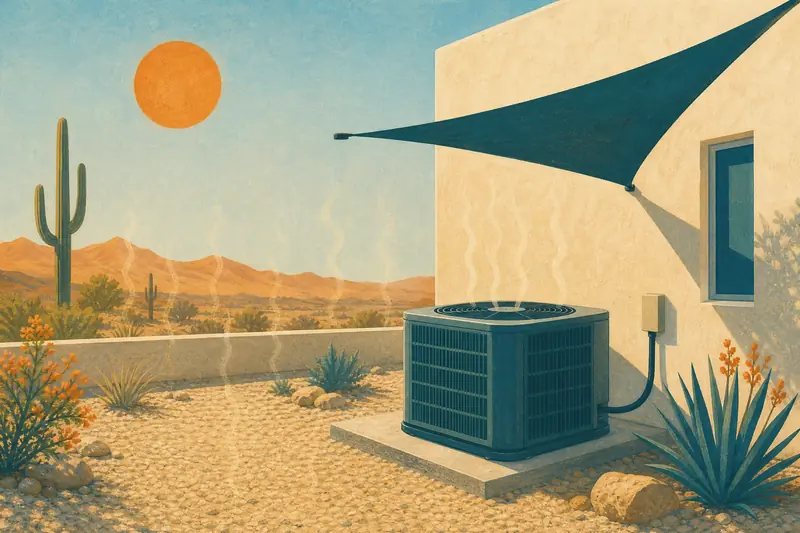
Some households should not push the number up. Older adults, babies and people on certain medicines lose heat tolerance first, so read the heat wave plan for older adults before chasing savings. In the desert Southwest, an evaporative cooler follows different rules.
| Period | ENERGY STAR cooling guidance | What it looks like from a 78°F base |
|---|---|---|
| Wake (home) | 78°F or warmer | 78°F |
| Day (house empty) | Setup of at least 7°F | 85°F or warmer |
| Evening (home) | 78°F or warmer | 78°F |
| Sleep | Setup of at least 4°F | 82°F or warmer |
Does setting the thermostat lower cool the house faster?
No: on most central systems a lower setting only makes the A/C run longer, not harder. A single-stage system has one speed, so its compressor delivers the same full output whether the target is 76°F or 65°F. Dropping the dial after a hot drive home just means the unit keeps going past the point you wanted, and you pay for the overshoot.
ENERGY STAR's thermostat guidance makes the same point about overrides: every time you override the schedule, you use more energy and may end up paying more. On a 110°F afternoon it may already run nonstop; see why an A/C can't keep up. Variable-speed equipment can ramp up, but the setting still only decides where it stops.
Does pre-cooling before peak hours save money?
Pre-cooling can cut your bill on a time-of-use rate, but it usually uses more electricity overall. A DOE Building America study of residential pre-cooling in Phoenix, Las Vegas and five other climates found energy savings "difficult to achieve with precooling alone." What worked was a setup of 2°F during the peak window, which cut estimated yearly cooling energy by 2% to 10%.
Lawrence Berkeley National Laboratory's simulations found long, cold pre-cooling could remove up to 97% of the peak cooling load, yet every strategy raised annual cooling energy. So the payoff depends on your rate: if on-peak power costs much more, shifting the work earlier can still lower the bill. Building America says cost savings are very dependent on the rates and the on-peak window.
Know your window first. Florida's utility regulator, the PSC, calls noon to 9 p.m. the worst summer stretch for running big appliances in that state. Elsewhere, check your utility's rate sheet before programming a pre-cool.
Should you turn the A/C off when you leave?
For a workday away, raise the setting rather than switching the system off. ENERGY STAR's schedule calls for a setup of at least 7°F while the house is empty, so 85°F or warmer if you keep 78°F at home. That saves most of the cooling hours without letting the house bake all afternoon.
In humid climates there is a second reason to leave it on at a higher number. The A/C is also your dehumidifier, and EPA advises keeping indoor humidity below 60 percent. A closed Gulf Coast house with the system off can turn clammy fast, which is the problem behind an A/C that runs but feels damp. For a week or longer away, ENERGY STAR suggests the "hold" button at a constant energy-saving temperature.
How do fans change the setting you need?
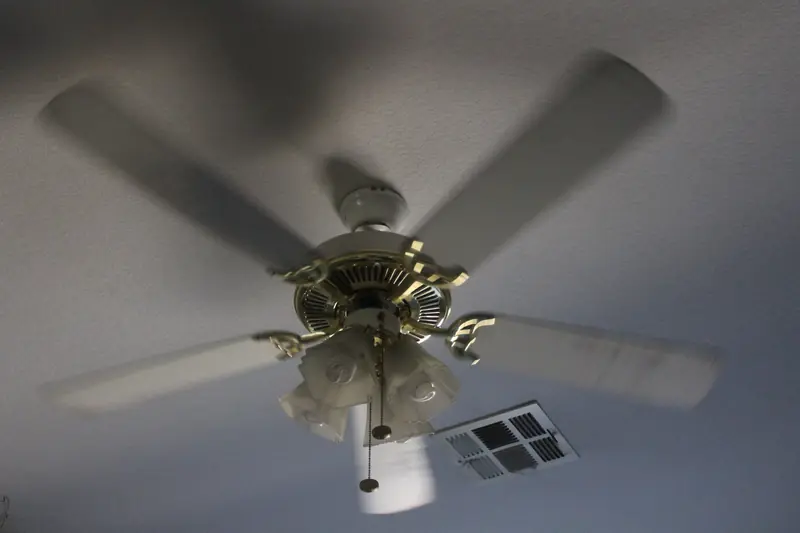
Running a ceiling fan buys you roughly 4°F on the dial with no comfort lost, according to DOE text on the South Carolina Energy Saver site. The catch is that the savings exist only if you raise the setting. Florida Solar Energy Center data from 400 homes found no cooling savings from fans, because the owners left their thermostats alone.
Fans cool skin, not rooms, so switch them off when you leave. The fan needs to turn counterclockwise in summer, which the ceiling fan direction page walks through. And fans have a hard ceiling: the CDC says to use them only if it is below 90°F indoors, because above that a fan can raise body temperature.
Which thermostat features help in hot climates?
A programmable schedule is the feature that matters most, because it makes the setups happen without anyone remembering. ENERGY STAR's 2009 guide estimated that a programmable thermostat used with its pre-set schedules saves about $180 a year, and its heating and cooling page puts a certified smart thermostat at about $100 a year.
Look for at least four daily periods (wake, day, evening, sleep), a hold or vacation mode, and an easy way to time a pre-cool for your utility's peak window. If you have a heat pump, DOE's guide says not to use deep setbacks without a thermostat designed for heat pumps. Supply-house programmable thermostat listings (PlumbingSupplyAndMore, owned by the people who run Swelter Almanac) show the range of schedule and wiring options before you shop.
Placement matters as much as features. ENERGY STAR says to keep the thermostat away from registers, lamps, appliances, doorways and direct sun, on an interior wall. Replacing one means working on low-voltage wiring with the power off at the breaker. If you're unsure, call a licensed technician.
Settings with sources
- 78°FENERGY STAR cooling setpoint when home and awakeENERGY STAR (2009)
- 7°FMinimum daytime setup while the house is emptyENERGY STAR (2009)
- 2–10%Yearly cooling energy saved by a 2°F peak-hour setupDOE Building America (2014)
- 4°FExtra degrees on the dial with a fan runningDOE text on SC Energy Saver
- 90°FIndoor heat where a fan starts adding body heatCDC (2026)
How this page was put together
This page draws on ENERGY STAR's A Guide to Energy-Efficient Heating and Cooling (2009) and its current heating and cooling pages, the DOE Energy Saver Guide (2022), DOE Building America's pre-cooling report (2014), LBNL's peak-load study (2014), FSEC research, the Florida PSC's electric-cost brochure, EPA's mold guide and the CDC's heat-health page, all read in October 2026. The Energy Saver website itself returned errors that month, so its older wording is not quoted. Left out: any promise of a yearly percentage from summer setups alone (DOE's 10 percent setback figure is a heating-season number), and utility peak hours outside Florida that could not be confirmed on a primary page.
More questions
Is 72°F too low for summer?
Nothing forbids it, and DOE says the choice is yours. It does cost more: a 2012 Energy Department article put the difference between 72°F and 78°F at 6 to 18 percent of the cooling bill. In extreme heat a system may also be unable to reach 72°F in the late afternoon at all.
What should the thermostat be at night in summer?
ENERGY STAR's schedule raises the setting at least 4°F for sleep, so about 82°F from a 78°F base. A ceiling fan over the bed makes that easier to tolerate. Skip the night setup for anyone sick, elderly or heat-sensitive.
Should the A/C fan be set to ON or AUTO?
AUTO in humid climates. Florida Solar Energy Center measurements found that with the fan left ON, moisture on the coil evaporated back into the house and moisture removal fell 44 percent. The details are on the page about clammy houses.
Is it cheaper to leave the A/C at one temperature all day?
Not usually. ENERGY STAR's schedule calls for a setup of at least 7°F while the house is empty, and a 2°F peak-hour setup alone saved 2 to 10 percent of cooling energy in Building America's study. A steady setting makes more sense only when someone is home all day.
What setting is safe for older adults during a heat wave?
No federal agency sets a safe indoor maximum for homes. The CDC's rule is that fans are not enough above 90°F indoors, and that older adults should not rely on a fan as the main cooling. Keep them in air conditioning; if the home has none, dial 2-1-1 and ask where the nearest cooled public space is open.
Next in A/C in extreme heat