Section · 3 pages
Cooling in Dry Desert Heat
Short answer
Cooling in dry heat works differently because desert air can soak up water, so an evaporative cooler can drop incoming air 15°F to 40°F on little power, until monsoon humidity arrives.
Swelter Almanac, checked against the sources · updated
This page links to Quality Water Treatment, owned by the people who run Swelter Almanac. About these links
The forecast in brief
- Dry air has a big gap between its ordinary and wet-bulb temperatures, and that gap is what an evaporative cooler spends (PNNL Building America Solution Center).
- Air leaving wet cooler pads can be 15°F to 40°F cooler than the air going in (PNNL).
- An Arizona extension bulletin put yearly cooling energy for a 1,600 sq ft home at about 6,000 kWh with refrigerated air and 1,500 kWh with an evaporative cooler (University of Arizona Cooperative Extension, AZ9145).
- The same bulletin warns that coolers lose ground during the few humid weeks of the summer monsoon.
- Phoenix field data averaged 7.6 gallons of water per hour of cooler operation (UA, 1994).
- The UA bulletin advises against feeding a cooler sodium-softened water: the sodium builds up on pads and in the reservoir.
Why does dry heat change the cooling choice?
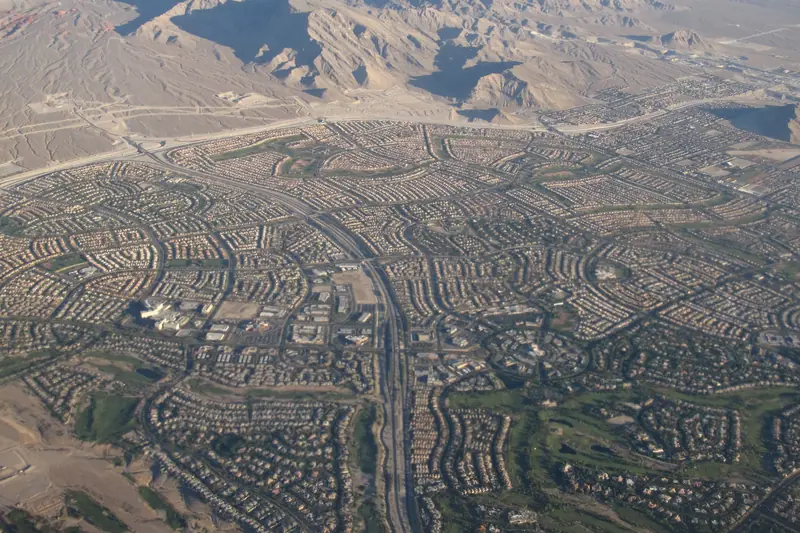
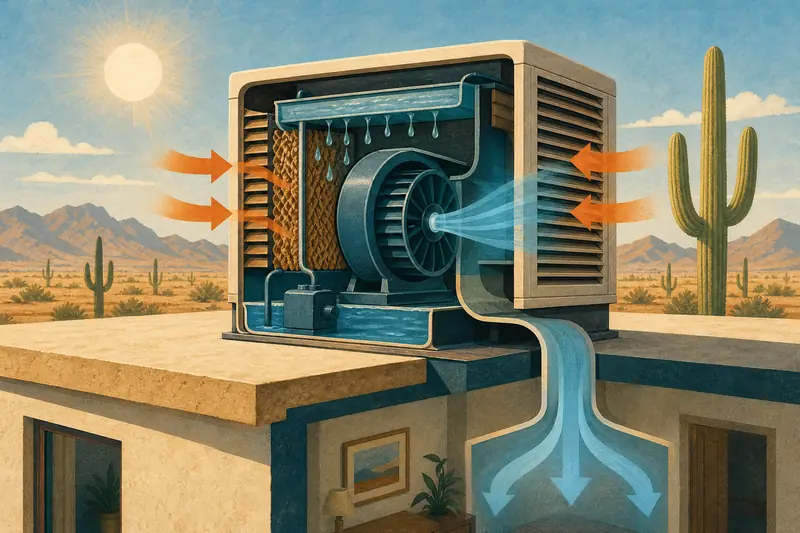
In dry heat, water evaporates fast, and evaporation pulls heat out of the air, so a box of wet pads and a fan can do much of the work a compressor does elsewhere. PNNL's example uses Phoenix design weather: 108°F on an ordinary thermometer but a wet-bulb reading of 70°F, a 38°F spread for a cooler to work with. In Sarasota, Florida, the same spread on a design day is only 13°F.
That gap is why the Sun Belt splits into two playbooks. In the desert Southwest you can cool with water and night air for much of the season. Along the Gulf Coast, the job is wringing moisture out, which is covered under cooling in humid heat.
How does an evaporative cooler compare with A/C?
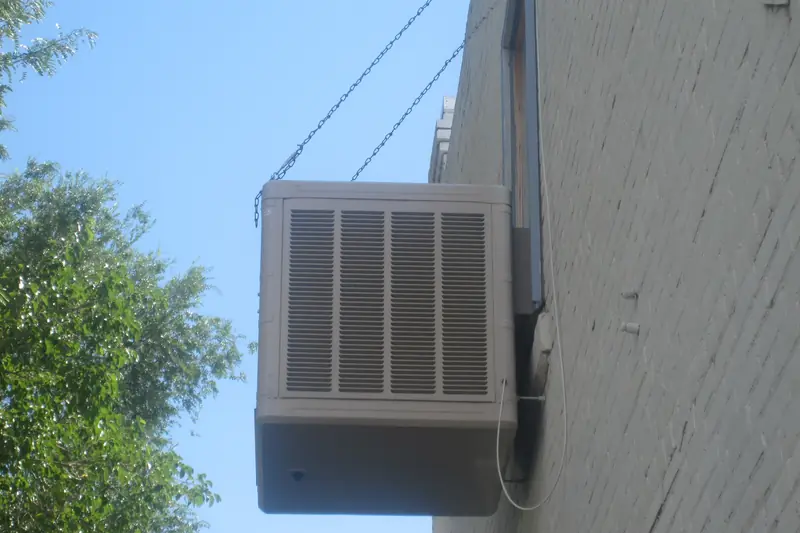
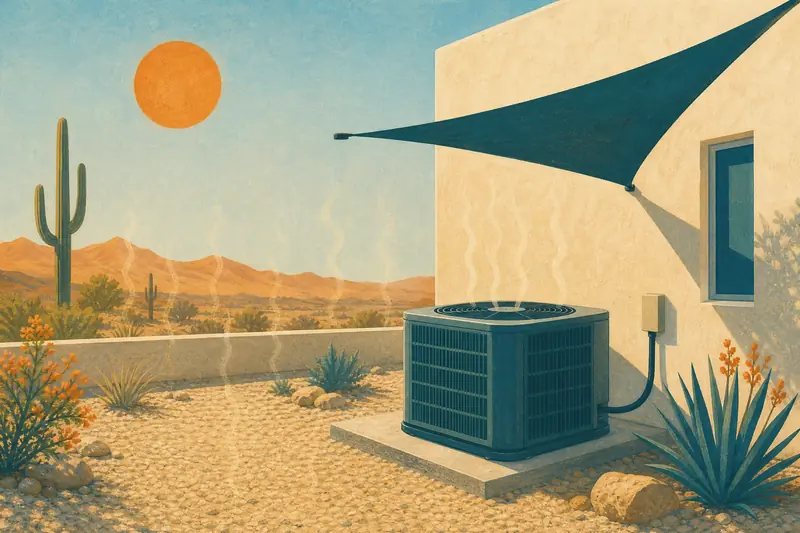
An evaporative cooler uses a fraction of the electricity but adds moisture and uses water, while central A/C dries the air and uses almost no water on site. The UA bulletin says air conditioning uses three to five times as much electricity as evaporative cooling, with sample yearly figures of 6,000 kWh against 1,500 kWh for a 1,600 sq ft home. Those numbers date from 1994, so treat them as a ratio, not a forecast for your bill.
Many desert homes keep both: the cooler for the dry months, the A/C for the sticky weeks. UA cautions not to run the cooler to pre-cool air headed into the A/C coil, because the extra moisture makes the refrigeration side work harder. If you lean on central air in the worst stretches, the extreme-heat A/C section covers settings and limits.
When does humidity stop a swamp cooler?
A swamp cooler fades as outdoor humidity climbs, because damp air will not take on much more water. PNNL gives a general rule that places with a design wet-bulb temperature of 70°F or lower suit evaporative cooling, and the Arizona bulletin notes that coolers falter during the monsoon weeks. Mississippi State Extension puts it bluntly for near-saturated air: evaporative cooling is "practically useless" then.
There is no single humidity percentage where a cooler quits, so watch the supply air instead. When the air from the vents stops feeling cool and the house turns clammy, close the cooler down and switch to refrigerated air or fans until the monsoon passes.
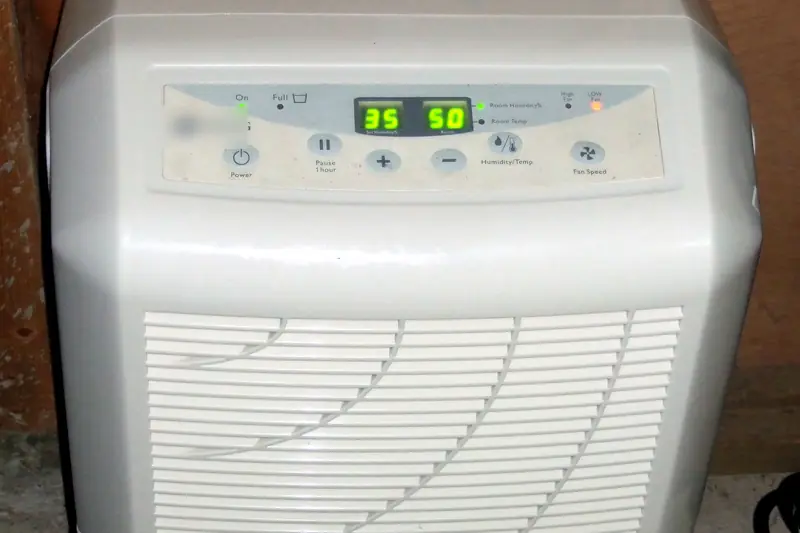
How much water do evaporative coolers use?
Water use runs to many gallons a day, and the figures depend on which study you read, so keep each with its own unit. A Phoenix field study in the UA bulletin averaged 7.6 gallons per operating hour, and coolers fitted with bleed-off used about 8,650 gallons across a cooling season. Separately, Lawrence Berkeley National Laboratory found an average of about 400 liters (roughly 106 gallons) per household per day in the US and Australia.
Hard water is the hidden cost: scale on pads causes hot spots, and UA cites estimates that the rust and corrosion it brings can cut a cooler's life by half. Knowing your water's hardness helps you set the bleed-off rate. A simple hardness test reagent (Quality Water Treatment, owned by the people who run Swelter Almanac) does that job; it tells you about the water, and the cooler should still get unsoftened water.
What else helps with cooling in dry heat?
Cool desert nights are free cooling: pull night air through the house, then shut it up before the sun climbs. DOE's Building America whole-house fan document says a house cools whenever the fan runs while it is cooler outside than in, and that running it in the evening and at night cools the interior materials. Shade on east and west windows helps a cooler too, according to UA.
Fans help people, not rooms, and the CDC says fans are not enough once indoor temperatures pass 90°F. In that heat, move to air conditioning or a cooling center; dial 2-1-1 to find one.
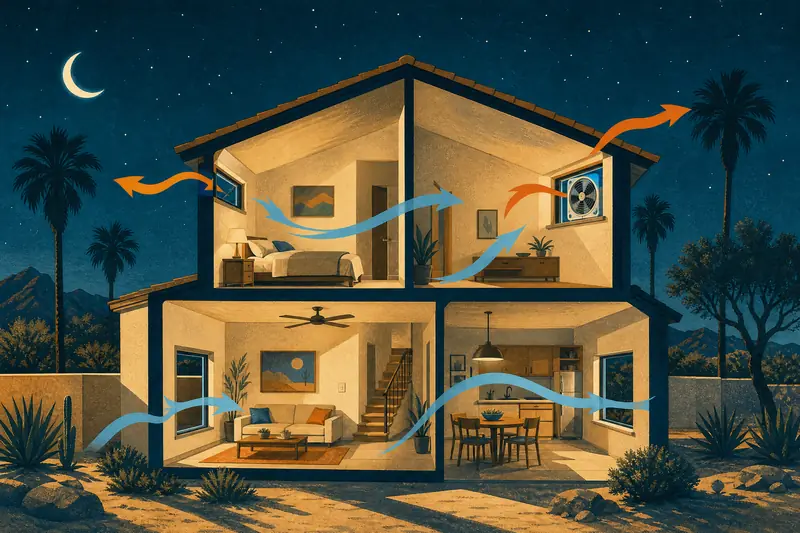 Moving airNight flushing step by step
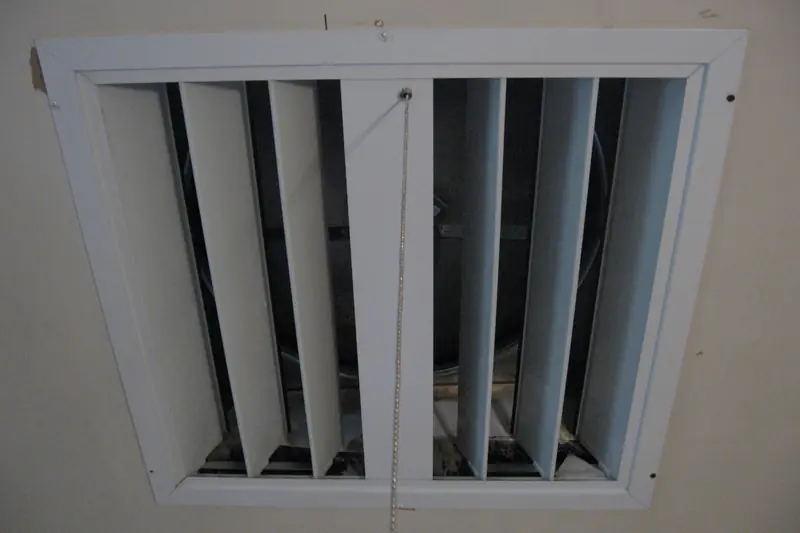 Moving airWhole-house fans vs attic fans
 SectionHeat safety at home
| Option | Fit for dry heat | Watch for |
|---|---|---|
| Evaporative cooler | Strong when wet-bulb is 70°F or lower (PNNL) | Water use, scale, monsoon humidity |
| Central A/C | Works in any humidity | Three to five times the electricity of a cooler (UA) |
| Night flushing | Strong where nights cool off | Close up before the day heats |
| Fans alone | Comfort below 90°F indoors | Not enough above 90°F (CDC) |
Dry-heat numbers
- 38°Fgap between dry-bulb and wet-bulb on a Phoenix design dayPNNL Building America Solution Center
- 15–40°Ftemperature drop as air passes wet cooler padsPNNL Building America Solution Center
- 1,500 kWhyearly evaporative cooling for a 1,600 sq ft home, vs 6,000 kWh refrigeratedUA Cooperative Extension AZ9145 (1994)
- 7.6 galwater per operating hour, Phoenix coolersUA Cooperative Extension AZ9145 (1994)
Is dry heat still dangerous indoors?
Yes: low humidity hides sweat, not heat stress, and the CDC guidance on fans above 90°F indoors applies in the desert too. Phoenix rentals carry their own rule: the Arizona courts' legal FAQ says a swamp cooler there must cool to 86°F, or at least 20°F below the outside temperature. Know the signs of heat illness, and call 911 for anyone confused or collapsing in the heat.
How this page was put together
This hub draws on the PNNL Building America Solution Center evaporative cooling page, University of Arizona Cooperative Extension bulletin AZ9145 (revised 1994, via handle 10150/146414), Lawrence Berkeley National Laboratory, Mississippi State Extension, DOE Building America, the CDC and the Arizona Judicial Branch, all read in October 2026. DOE Energy Saver pages were offline, so their cost and water estimates are left out, along with any hard humidity cutoff no primary source states.
More questions
Is a swamp cooler the same as an evaporative cooler?
Yes. "Swamp cooler" is the everyday name for a direct evaporative cooler, a fan that pulls outside air through water-soaked pads. PNNL notes the older name is still common.
Does a swamp cooler work in Tucson in August?
Often less well. The Arizona extension bulletin says coolers work well except during the few weeks of monsoon humidity, and many homes switch to refrigerated air for that stretch.
Can I run a cooler with the windows shut?
No. A cooler pushes outside air in, so that air needs a way out through partly open windows or ceiling relief vents, as both PNNL and UA describe.
Do I need a water softener for my cooler?
No, and UA advises against using softened water in one. Sodium from softening collects on pads and in the reservoir. Feed the cooler from an unsoftened line or whatever its maker specifies.
Is the 1994 Arizona bulletin still useful?
For physics and upkeep, yes; evaporation works the same way. Treat its dollar and kilowatt-hour figures as ratios from that time rather than today's prices.
Should I check on neighbors during a desert heat wave?
Yes. The CDC asks people to check on older adults at least twice a day in extreme heat, dry heat included.
Back to every section of the almanac