Portable vs Window Air Conditioners
Short answer
Portable air conditioner vs window unit: a window unit usually cools better, because a single-hose portable pulls all its condenser air from the room and draws hot outside air in to replace it (DOE).
Swelter Almanac, checked against the sources · updated
Points on this page
The forecast in brief
- A single-duct (single-hose) portable takes all of its condenser air from the room it is cooling, which sets up negative pressure and pulls in air from outdoors, attics and crawlspaces (DOE test procedure).
- DOE found single-duct portables typically cause more of that infiltration than comparable dual-duct units, and its rating method subtracts it from capacity.
- Portables are tested at two conditions, 95°F and 83°F, and labeled with a seasonally adjusted cooling capacity (SACC).
- A badly fitted window unit leaks as much air as a 6-square-inch hole (ENERGY STAR).
- New window and portable units made or imported from January 1, 2025 need refrigerant with a global warming potential under 700 (EPA).
Portable air conditioner vs window unit: which cools better?
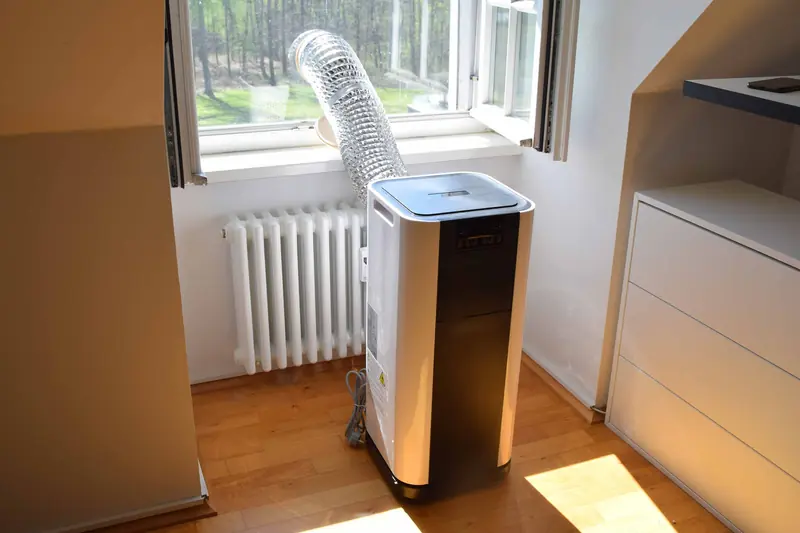
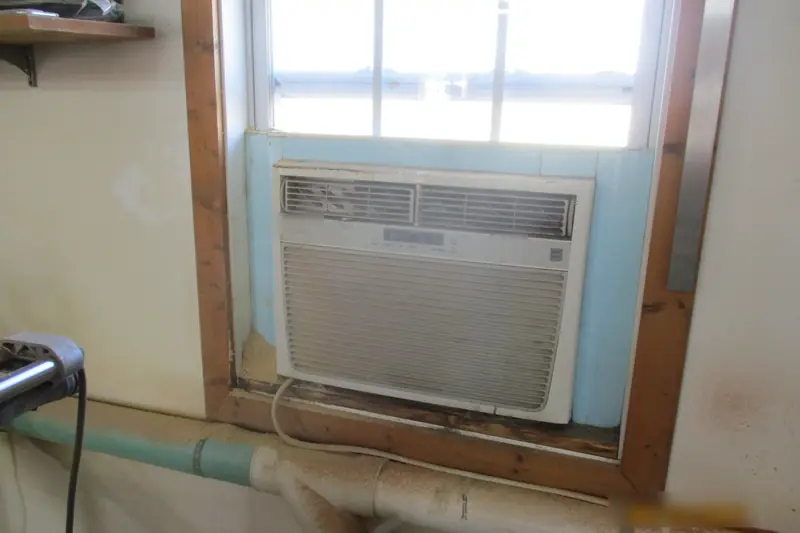
A window unit cools better for the same rated size in most rooms, because its hot side sits outdoors and nothing it does pulls outside air into the house. A portable sits entirely in the room, so it has to send its heat out through a hose and, in the common single-hose design, uses room air to do it. That is why the same nominal BTU number can feel weaker on a portable.
No primary source gives a single percentage gap between the two types, and Swelter Almanac does not quote one. What DOE did publish is how the difference arises, and that explanation is below. If you are still choosing a size, start with the room AC sizing chart and come back.
| Type | Where the condenser air comes from | Main weak point | Federal rating |
|---|---|---|---|
| Window unit | Outdoors, through the cabinet's back half | Gaps around the cabinet if poorly fitted | CEER under the room AC test |
| Single-hose portable | All of it from the room being cooled | Negative pressure pulls outside air in | SACC and CEER under Appendix CC |
| Dual-hose portable | Mostly outdoors via an intake hose; some from the room | Smaller infiltration, plus warm hoses | SACC and CEER under Appendix CC |
| U-shaped or saddle window unit | Outdoors, compressor outside the window | Needs a suitable sill and window | CEER under the room AC test |
Why do single-hose portables lose cooling?
A single-hose portable blows its condenser air out the window, and that air has to be replaced from somewhere, so the room goes slightly negative and hot air leaks in. DOE's portable AC test procedure says the effect is "most pronounced for single-duct units," which draw all their condenser air from inside. Dual-duct units also usually take part of their condenser air from the room, so they are better, not immune.
The replacement air comes from wherever the house is leaky. DOE names outdoors, attics and crawlspaces, which in July in Tucson or Baton Rouge means some of the hottest or wettest air around. In humid heat, that infiltrating air also brings moisture the unit then has to remove.
DOE's response was to change how portables are rated. The test now runs at 95°F and at 83°F to represent the hottest 750 or so hours a year when portables run, and it reports a seasonally adjusted cooling capacity (SACC) that accounts for infiltration and heat from the ducts and case. When you compare portables, compare SACC rather than an older-style capacity figure.
Which uses less electricity?
For the same cooling actually delivered to a room, a well-fitted window unit generally uses less, but the two labels are not on one scale you can line up. Room units are rated by CEER under the room AC test and ENERGY STAR Version 5.0; portables carry a CEER and SACC measured under a different DOE method, 10 CFR 430 Appendix CC. The portable's numbers already subtract the infiltration penalty.
Within one type, the label works well. ENERGY STAR says room units with variable-speed compressors are the much more efficient options, since they slow down rather than cycling fully on and off. The same page suggests setting the thermostat around 78°F, as high as is comfortable.
One regulatory note, dated October 2026: DOE has proposed withdrawing its determination that portable ACs are a covered product. Until that is settled, Swelter Almanac treats the SACC rating as the useful number on a portable.
When is a portable the only option?
A portable is the right call when a window unit cannot go in: casement or slider windows that will not take a cabinet, a lease or homeowners' rule against units in windows, or a room you only need to cool for a few weeks. A portable needs only a small window opening for the hose and an outlet, and it can roll to the bedroom at night.
If you go portable, a dual-hose model reduces the infiltration problem DOE describes. Keep the exhaust hose short and as straight as the kit allows, seal the window kit's edges and empty or drain the condensate the way the manual says. Close the door to the room so the unit is not trying to cool the hallway.
There is a third path for a room you will cool every summer: a ductless mini-split, which ENERGY STAR describes as a replacement for window units, keeps the compressor outdoors and leaves the window free. It costs more and needs a licensed installer, so it is a long-term fix, not a heat-wave purchase.
How do you install either one well?
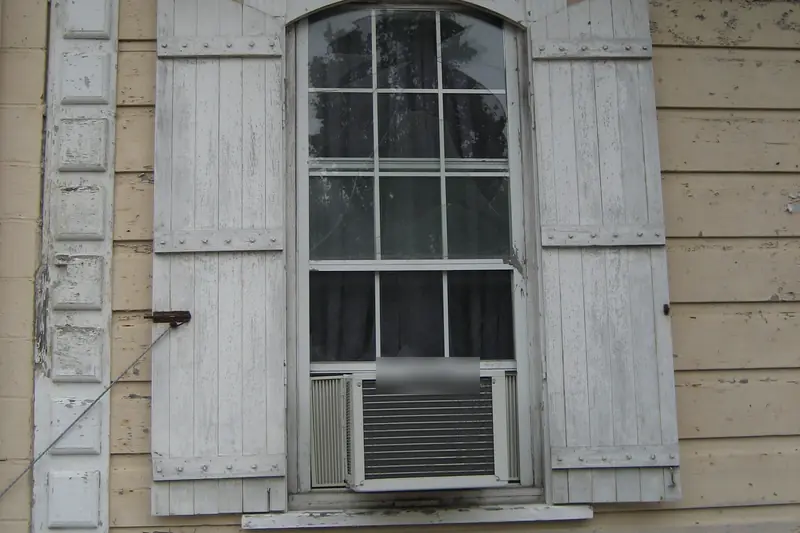
Install a window unit level, sealed with the panels and foam it came with, and supported the way the manual shows; a poor fit leaks like a 6-square-inch hole. Most window units are too heavy and awkward for one person to set safely, so lift with two, fit the bracket or support the manual calls for, and on an upper floor keep children well away from the open sash until the unit is secured. ENERGY STAR also says to keep lamps and TVs away from the unit's thermostat, and to run the fan on low on humid days so the coil removes more moisture.
A portable needs its hose run out a window kit sealed on all edges, a clear space around the cabinet for intake air, and a plan for the water it collects. Plug either type straight into a wall outlet that suits its rating, not an extension cord, unless the manual allows one. If the unit trips a breaker more than once, stop using that circuit and have it checked.
Room units are sealed systems: if one stops cooling, refrigerant is not something you top off. Only EPA Section 608 certified technicians may buy refrigerant for home cooling equipment (EPA). If you're unsure, call a licensed technician.
What should you do if neither keeps up in a heat wave?
Get to a cooler place before you get to a hardware aisle: the CDC says to use air conditioning or dial 2-1-1 to find a location that has it. A struggling room unit plus a fan is not a plan once indoor air tops 90°F, when a fan can raise body temperature. See heat safety at home for the warning signs and when the central A/C breaks if the whole house is out.
In dry heat, a well-maintained evaporative cooler can carry a room through the low-humidity months. In humid heat, keep the room unit's fan on low and pair it with a dehumidifier only if the air still feels damp.
Portable and window unit numbers
- AllCondenser air a single-duct portable draws from the roomDOE
- 2DOE test conditions for portables: 95°F and 83°FDOE
- 6 sq inLeak of a poorly installed window unitENERGY STAR
- 700GWP limit for new self-contained units from 2025EPA
How this page was put together
Based on DOE's 2016 final rule for the portable air conditioner test procedure (read from the DOE-hosted PDF), DOE's portable AC program page, the ENERGY STAR room air conditioner page, EPA's refrigerant sales and HFC technology-transition pages, and the CDC heat-health page, read in October 2026. Left out: any percentage gap between portables and window units (no primary source states one), consumer-magazine test figures, brand names and prices.
More questions
Is a dual-hose portable as good as a window unit?
It is closer, but DOE says dual-duct units still usually draw part of their condenser air from the room. The hoses also run warm inside the room. A well-fitted window unit still keeps more of the heat outdoors.
Why does the portable's box show two BTU numbers?
Older ratings used a test that ignored infiltration. DOE's current method reports a seasonally adjusted cooling capacity (SACC), which is lower because it counts the outside air the unit pulls in. Compare portables by SACC.
Can you vent a portable into the attic or a closet?
No. The exhaust is hot, moist air that belongs outdoors; venting it into an attic or closet heats the house and can cause moisture damage. Use the window kit or a wall vent the manual approves.
Do window units work in casement windows?
Standard cabinets need a sash that slides up and down. Some makers sell casement or slider models, and ENERGY STAR rates them separately. Otherwise a portable or a mini-split is the practical choice.
Should you run a portable with the door open?
Close the door. An open door lets the unit fight the heat of the whole floor, and a single-hose model pulls even more outside air in to replace what it exhausts.
Are older R-410A window units still allowed?
EPA's GWP under 700 limit applies to units manufactured or imported from January 1, 2025, so a unit you already own can keep running. Repairs to its sealed system are a job for a certified technician.
More on cooling one room

Back to every section of the almanac