Cool Roofs and Reflective Coatings
Short answer
Cool roofs reflect sunlight and shed absorbed heat, so a clean white roof can run about 55°F cooler than a gray one and typically saves 7–15% of a building's cooling costs.
Swelter Almanac, checked against the sources · updated
Points on this page
The forecast in brief
- A clean white roof reflecting 80% of sunlight stays about 55°F cooler than a gray roof reflecting 20% (LBNL Heat Island Group).
- Average savings run 7–15% of total cooling costs, according to the Cool Roof Rating Council (CRRC).
- In air-conditioned homes, EPA reports cool roofs can cut peak cooling demand by 11–27%.
- Homes without A/C saw maximum indoor temperatures drop 2.2–5.9°F (EPA).
- The ENERGY STAR roof label ended on June 1, 2022; CRRC ratings are now the place to compare products.
- Look for two numbers, solar reflectance and thermal emittance, and prefer the aged values over the initial ones.
What is a cool roof?
A cool roof is a roof surface that reflects most of the sun's energy and quickly sheds the heat it does absorb. Lawrence Berkeley National Laboratory's Heat Island Group says a cool roof needs both high solar reflectance (SR) and high thermal emittance (TE), and EPA calls high reflectance the most important of the two.
The load it fights is large. At noon on a clear US summer day, a flat surface receives about 1,000 watts of sunlight per square meter, roughly 100 watts per square foot, according to LBNL. A dark roof soaks most of that up, heats the attic, and warms the air above it, which is part of why EPA says conventional roofing can reach as much as 66°F warmer than the surrounding air.
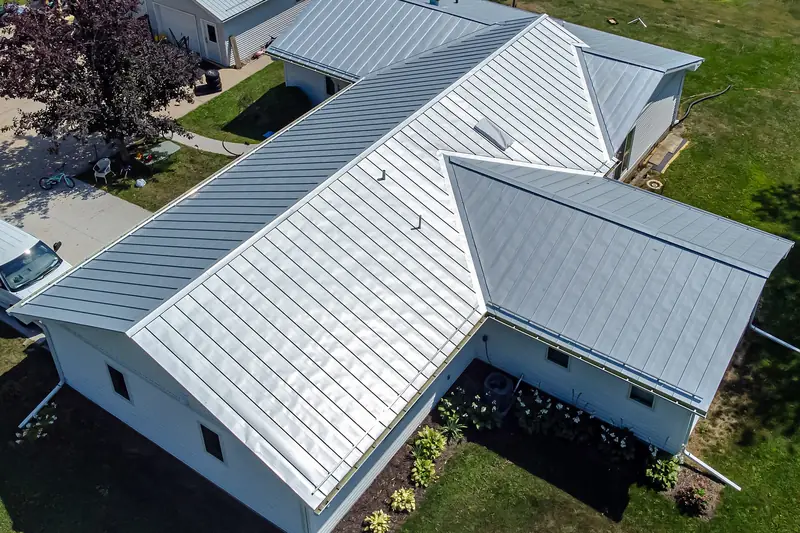
A cool roof does not have to be white. About half of the sun's energy arrives as invisible near-infrared light, and LBNL explains that cool-colored products reflect more of it while looking like ordinary dark roofing. Researchers at LBNL and Oak Ridge National Laboratory worked with makers on cool-colored asphalt shingles, metal, tile and ballast for pitched roofs.
How much cooler does a cool roof stay?
On a typical summer afternoon, a clean white roof that reflects 80% of sunlight stays about 55°F cooler than a gray roof that reflects only 20%, according to LBNL. A cool-colored roof reflecting 35% runs about 22°F cooler than a traditional roof of the same color reflecting 10%.
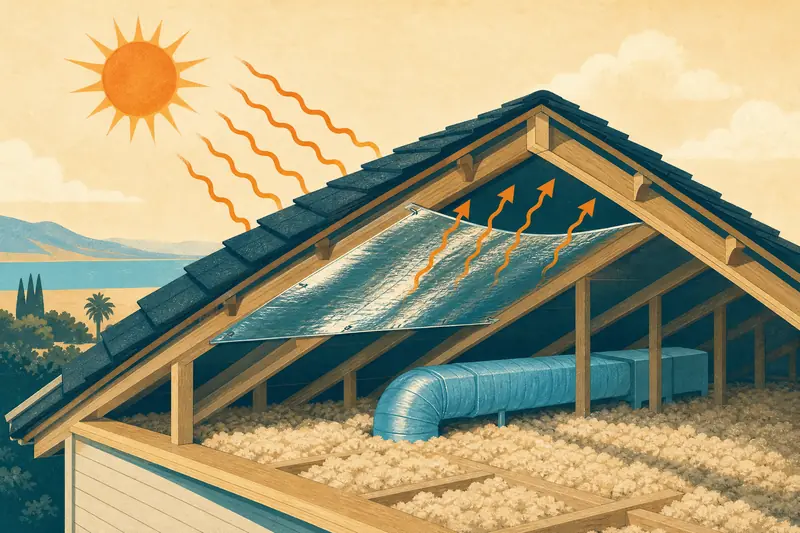
Field photos tell the same story: LBNL shows a black roof measured 54°F warmer than a neighboring white roof on a summer afternoon. For comparison, the DOE Building America brief on radiant barriers notes that roof surfaces in hot climates can top 160°F, which is why the attic under a dark roof becomes an oven. A cooler deck means less heat radiating into the attic, toward any ducts up there, and down through the ceiling. The radiant barrier page covers the foil that blocks what the roof still radiates.
How do you read cool roof ratings?
Read two measured numbers, solar reflectance and thermal emittance, on the product's CRRC listing. The Cool Roof Rating Council bases every rating on those two surface properties and publishes them in its Rated Roof Products Directory, which covers asphalt shingles, coatings, metal, tile, single-ply membranes and more.
Higher is cooler on both. Reflectance is the fraction of solar energy the surface reflects; emittance is how well the material sheds the heat it absorbs. CRRC notes that emissivity and color are not directly correlated, so bare metal can look bright and still run hot because it holds its heat.
Prefer aged values. The ANSI/CRRC S100 test standard measures both initial and aged properties, because dirt and weather dull a roof over time, and California's Title 24, Part 6 sets requirements on three-year aged reflectance. A third number, the Solar Reflectance Index (SRI), combines the two into one score that usually falls between 0 and 100; CRRC stresses that SRI is calculated, not measured.
The ENERGY STAR roof label is gone. EPA told brand owners to stop using the ENERGY STAR name on roof products on and after June 1, 2022, and CRRC describes its own program as an alternative for incentives and code compliance. A seller still pointing to an ENERGY STAR roof label is quoting a program that no longer exists.
| Figure | What it measures | Source |
|---|---|---|
| About 55°F cooler | White (80% reflective) vs gray (20%) roof surface | LBNL Heat Island Group |
| About 22°F cooler | Cool-colored (35%) vs look-alike (10%) roof surface | LBNL Heat Island Group |
| 7–15% | Average share of total annual cooling costs saved | Cool Roof Rating Council |
| 11–27% | Peak cooling demand cut in air-conditioned homes | EPA |
| 2.2–5.9°F | Drop in maximum indoor temperature, homes without A/C | EPA |
How much can a cool roof save?
Most homes should expect 7–15% off total cooling costs, the average range CRRC gives for cool roofs. That is an annual cost figure, and it is a different measure from EPA's, which says that in air-conditioned homes a cool roof can cut peak cooling demand by 11–27%. Peak demand is the hottest-hour load, so the two numbers do not add or substitute for each other.
For houses with no air conditioning, the gain is comfort. EPA reports that cool roofs lowered maximum indoor temperatures by 2.2 to 5.9°F in non-air-conditioned homes, which can matter in a heat wave for anyone who can't run the A/C.
Savings shrink where winters are long, because a cool roof also reflects welcome winter sun. EPA notes that this heating penalty is typically offset by summer savings, and LBNL's mapping shows it outweighed across most of the country. Across the desert Southwest, Texas, Florida and the Gulf Coast, the penalty is small.
Cool roof figures
- 55°FCooler surface, white roof vs gray roofLBNL Heat Island Group
- 7–15%Average cut in total cooling costsCool Roof Rating Council
- 11–27%Peak cooling demand cut in A/C homesEPA
- June 1, 2022End of ENERGY STAR roof certificationEPA
Are reflective roof coatings worth it?
Reflective coatings are worth considering mainly on low-slope ("flat") roofs, where EPA lists liquid-applied coatings in light or cool colors among the standard cool roof products. CRRC defines a low-slope roof as less than 2 inches of rise per 12 inches of run, common on commercial buildings but also found on some single-family homes and low-rise apartments.
CRRC rates coatings in several chemistries, including silicone, acrylic, polyurethane, aluminum and urethane, so you can compare a specific product's initial and aged reflectance before buying. For a steep-slope roof (2 inches of rise per 12 or more), EPA's list leans on cool-colored shingles, tiles and metal with reflective paint rather than liquid coatings.
Keep it clean or the savings fade. EPA says ongoing costs can include periodic cleaning to keep reflectance high, particularly on low-slope roofs, and products with special infrared-reflective pigments tend to cost more. For flat roofs, CRRC points to DOE's online cool roof calculator to estimate savings for a specific climate.
Where does a cool roof pay off?
A cool roof pays off most on a house with a long cooling season, a large sunlit roof, and ducts or an air handler in the attic. Those conditions describe much of the Sun Belt, whether the heat is dry desert heat or the humid Gulf Coast kind.
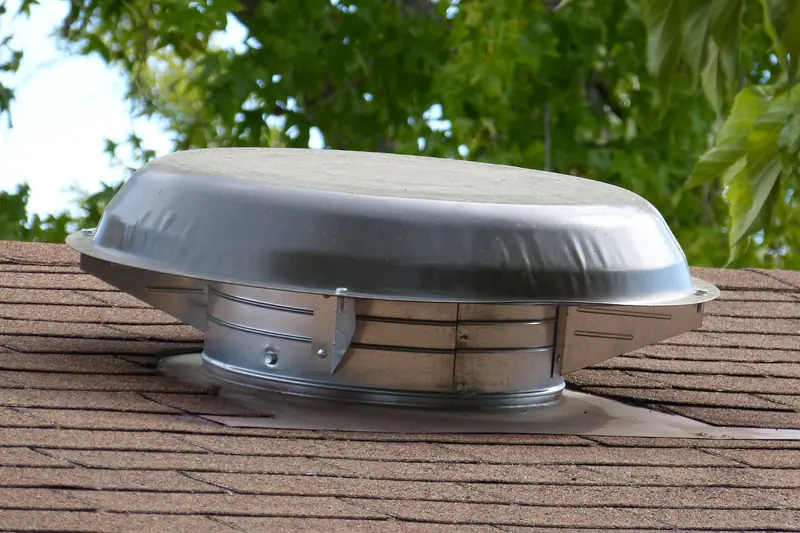
Timing matters more than anything. Recoating a flat roof or replacing worn shingles is the sensible moment to pick a rated cool product, since the labor is being paid for anyway. FSEC's attic research names a white reflective roof, more attic insulation and a truss-mounted radiant barrier as better ways to cut attic heat than powered attic fans, which the whole-house fan vs attic fan page explains.
How this page was put together
This page is based on the LBNL Heat Island Group's cool roof explainer, the Cool Roof Rating Council's guidance for home and building owners and its note on the ENERGY STAR roof sunset, EPA's cool roof and heat island pages, EPA's 2022 ENERGY STAR roof sunset notice, and FSEC attic research, all read in October 2026. Left out: a DOE "more than 50°F" figure that could not be read on a live DOE page, product brands, installed prices, and any savings promise for a specific house.
More questions
Does a cool roof have to be white?
No. LBNL describes cool-colored shingles, metal and tile that look like conventional dark roofing but reflect more near-infrared light; a 35%-reflective cool-colored roof runs about 22°F cooler than a 10%-reflective look-alike.
Is a metal roof automatically a cool roof?
Not necessarily. CRRC points out that a material with low emissivity holds onto heat, which is why bare metal in the sun gets hot to the touch; painted or coated metal with high rated reflectance and emittance performs far better.
Will a cool roof raise my heating bill?
A little, in cold climates. EPA and LBNL both say the winter heating penalty is typically smaller than the summer cooling savings across most of the US, and in hot southern states it is minor.
Can I still buy an ENERGY STAR roof?
No. ENERGY STAR certification for roofing ended on June 1, 2022, and EPA told brand owners to stop using the label on roof products. Check the product's CRRC rating instead.
Do green roofs count as cool roofs?
CRRC treats them as a separate thing: green roofs stay cool by evaporating water rather than by reflecting sunlight, and CRRC does not rate them.
How do I estimate savings for my own house?
For a low-slope roof, CRRC links to DOE's cool roof calculator. For a pitched roof, use CRRC's 7–15% average range as a rough guide.
Related pages