Finding a Cooling Center
Short answer
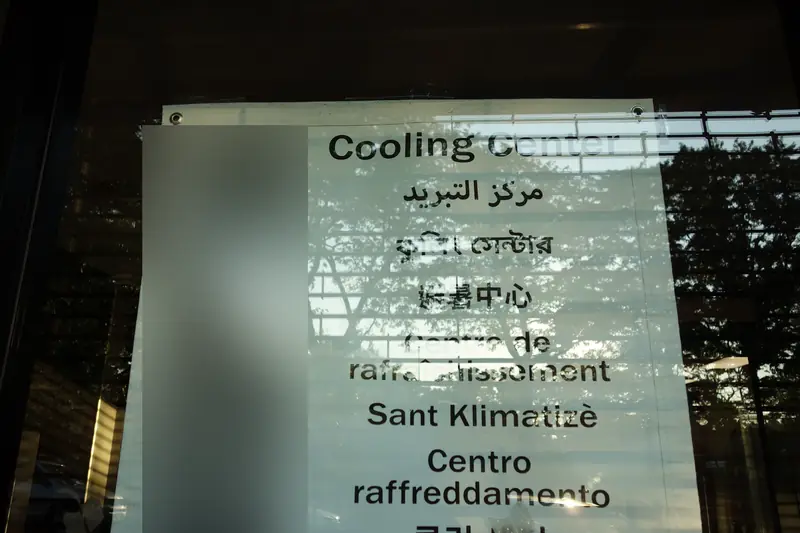
Cooling centers are free, air-conditioned public spaces opened during heat waves; to find the nearest one, dial 2-1-1, call your local health department, or check your state or county heat-relief map.
Swelter Almanac, checked against the sources · updated
Points on this page
The forecast in brief
- The CDC says to use air conditioning or find a place that has it by dialing 2-1-1.
- Maricopa County's 2026 Heat Relief Network mapped more than 200 sites from May 1 through September 30.
- 211 Arizona took calls in English and Spanish from 9 a.m. to 7 p.m. daily during the 2026 season.
- In Texas, the Department of State Health Services points to the TDEM map and to 2-1-1, option 1.
- Pet rules differ: some Clark County, Nevada, stations take pets in carriers or on leashes; other counties allow only service animals.
- No statewide Florida cooling-center locator was found on a state site in October 2026; county health departments and emergency management are the route.
A cooling center is the backstop when home gets too hot to be safe. It usually costs nothing and is often a building you already know: a library, a recreation center, a senior center. The hard parts are finding which ones are open today and getting there, and that is what this page covers.
What is a cooling center?
A cooling center is a public building opened with air conditioning so people can escape the heat, usually at no cost. Maricopa County's network describes three kinds of site: indoor cooling centers, respite sites where people can rest for extended periods, and hydration stations. In Anne Arundel County, Maryland, the county's cooling relief page says every site has air conditioning, water and restrooms.
Hours vary widely from one site to the next. In that same Maryland county, police district lobbies stay open around the clock while senior activity centers keep weekday business hours. A cooling center is not a clinic, so anyone showing heat stroke signs such as confusion or fainting needs 911, not a ride to the library; the illness signs page lists them.
How do you find a cooling center near you?
Dial 2-1-1 or contact your local health department; the CDC names both, along with your local emergency management agency. 211 is a network of local help lines across the country, and its calls are confidential. When the National Weather Service issues an Extreme Heat Watch, its advice for homes without air conditioning is to locate the nearest cooling shelter or arrange to stay with nearby family or friends who have it.
Several Sun Belt states run their own maps. Arizona's statewide ADHS heat safety page links cooling centers and hydration stations, and the Phoenix-area map at hrn.azmag.gov lets you filter sites. Texas keeps a map of local relief centers at tdem.texas.gov/cool. Clark County, Nevada, posts each round of cooling station openings with dates.
| Area | First place to look | Phone route |
|---|---|---|
| Arizona (Phoenix area) | Heat Relief Network map, hrn.azmag.gov | 2-1-1; live operators 9 a.m. to 7 p.m. in season |
| Texas | TDEM relief center map, tdem.texas.gov/cool | 2-1-1, then option 1 |
| Nevada (Las Vegas area) | Clark County cooling station notices | 2-1-1 |
| Florida | County health department or county emergency management | 2-1-1 |
| Anywhere in the US | Local health department | 2-1-1 |
Seasons end. Maricopa County's extreme heat page said many heat relief sites closed on September 30, 2026, while some stayed open through October. Outside the main season, call before you go.
What should you bring?
Bring a full water bottle, the medicines you will need for the day, and anything that makes a long wait bearable. The CDC tells older adults to drink more water than usual and not wait for thirst, and a refillable bottle makes that easy even where water is provided. Carry medicines in a bag that stays with you rather than in the car: CDC guidance for clinicians warns that insulin can weaken in heat and inhalers can burst in a hot car trunk.
Ask about pets before you leave. Clark County says some of its stations are pet-friendly and accept animals in carriers or on leashes; Anne Arundel County allows no pets at its sites but makes accommodations for service animals. A phone, a charger, and a list of your medicines and doctors are sensible extras if you may be there for hours.
Cooling help by the numbers
- 200+Heat relief sites on Maricopa County's 2026 mapMaricopa County
- 9 a.m.–7 p.m.211 Arizona live operator hours, daily in seasonMaricopa County
- Sept. 30Date many Maricopa sites closed in 2026Maricopa County
- 90°FIndoor temperature above which a fan can raise body heatCDC
What if you can't get to a cooling center?
Ask for a ride, move in with someone who has air conditioning, or cool the home as best you can while you arrange either one. Maricopa County's 2026 network offered transportation to and from heat relief sites for eligible people, and 2-1-1 operators can tell you whether something similar runs near you. NWS advice to stay with family or friends who have A/C is often the fastest fix.
If you must stay put, pick the coolest room, take cool showers or baths, skip using the stove or oven, and wear loose, light clothing; all four come from CDC advice for older adults. Keep a fan in use only while the room stays under 90°F. Have someone check on you at least twice a day, and see the older adults page for the full check-in list. If a room air conditioner is an option, sizing a room unit shows what capacity a bedroom needs.
When the problem is a power outage, Ready.gov says to go to a community location with power if heat is extreme. Anyone running a portable generator must keep it outdoors, at least 20 feet from the house, and never in a garage, basement or shed even with doors open (CPSC). The A/C breakdown plan covers outages and failed systems in more detail.

Which other places count as cool spaces?
Libraries and shopping malls are the everyday cool spaces that Ready.gov and the NWS both name. Recreation centers and community centers fill the same role in many counties, and Clark County uses all three for its cooling stations. Ready.gov also suggests asking your local health department which places nearby are set up to help.
A few cautions apply. A parked car is never a cool space: Ready.gov says never to leave people or pets in a closed car on a warm day. Shade outdoors helps, but the NWS heat index already assumes shade, so a shady bench at a 105°F heat index is still in the Danger band. For the reasons heat hits some homes harder, see cooling in humid heat and the heat safety hub.
How this page was put together
This page uses the CDC heat-health overview (July 2026) and older-adults page, Ready.gov, NWS heat safety pages, 211.org, Maricopa County's April 2026 Heat Relief Network notice and its extreme heat page, the Arizona Department of Health Services, Texas DSHS (2023 alert) and the TDEM map, Clark County, Nevada, Anne Arundel County, Maryland, and CPSC's 2026 generator warning, read in October 2026. Site lists change daily, so no individual addresses or hours are given. A national cooling-center list run by a nonprofit and linked by the CDC exists but was not used as a source.
More questions
Do cooling centers cost anything?
Public cooling centers are generally free. Maricopa County describes its network as free, cooled spaces, and Anne Arundel County provides its cooling relief sites at no cost.
Can I sleep at a cooling center overnight?
It depends on the site. Most cooling centers keep daytime hours, while some counties run respite sites for longer stays or keep certain lobbies open around the clock. Ask 2-1-1 which sites near you are open overnight.
Are cooling centers open in October?
Some are. Maricopa County said many sites ended service on September 30, 2026, but some stayed open through all of October. Clark County opens stations for each heat event; one 2026 round ran September 9 to 11.
Can I bring my dog to a cooling center?
Only where the site allows it. Some Clark County stations accept pets in carriers or on leashes, and the Phoenix-area map lists pet-friendly locations, while other counties accept only service animals.
Does 2-1-1 work everywhere?
211 operates through local help lines across the country, and calls are confidential. Hours and services vary by area; Arizona's live operators worked 9 a.m. to 7 p.m. daily during the 2026 heat season.
Should I go to a cooling center or the emergency room?
A cooling center is for staying cool. Anyone with confusion, slurred speech, fainting, a seizure or a body temperature above 103°F needs 911 or an emergency room immediately.
Back to the Swelter Almanac front page