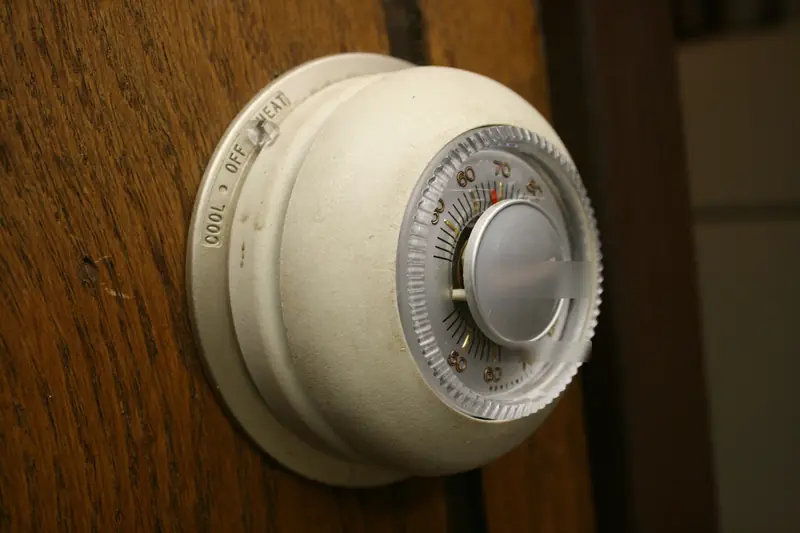
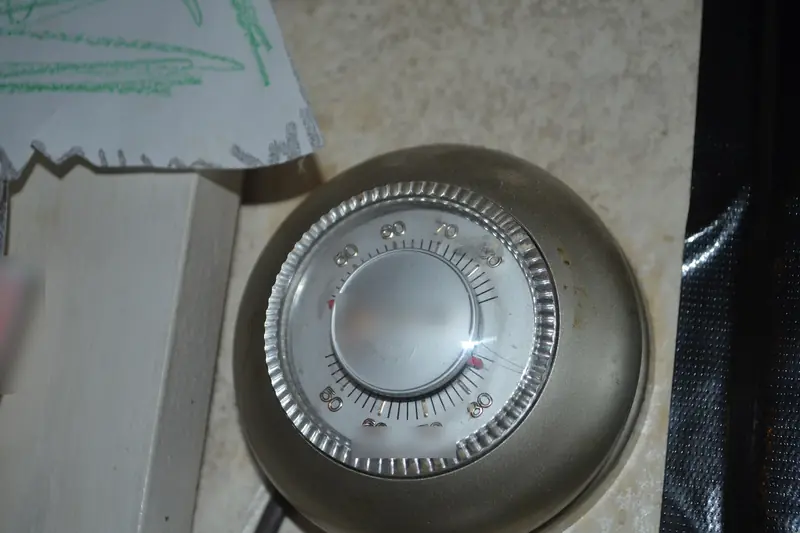
A/C Maintenance Before the Heat
Short answer
AC maintenance an owner can safely do comes down to the filter, the outdoor unit and the condensate drain, done in spring with the power off; coils, refrigerant and wiring belong to a technician.
Swelter Almanac, checked against the sources · updated
This page links to PlumbingSupplyAndMore, owned by the people who run Swelter Almanac. Those links are examples only; no figure here depends on them. About these links
Points on this page
The forecast in brief
- ENERGY STAR says to check the filter every month in heavy-use seasons and change it at least every 3 months.
- EPA suggests a MERV 13 filter, or the highest rating your system's fan and filter slot can take.
- ENERGY STAR says to check the cooling system in spring, before the heat, and heating in the fall.
- A plugged condensate drain can cause water damage and raise indoor humidity (ENERGY STAR); EPA says to dry any wet area within 24 to 48 hours.
- The Minnesota Commerce Department lists keeping plants clear of the outdoor unit and hosing its coil as owner jobs.
- Refrigerant, coils, wiring and capacitors are technician work; only Section 608 certified technicians may buy refrigerant (EPA).
Which AC maintenance can you do yourself?
You can change the filter, clear and rinse the outdoor unit, flush the condensate line and keep registers open; the rest is a technician's job. ENERGY STAR's maintenance checklist lists only the filter under things to do yourself. The Minnesota Commerce Department adds clearing foliage and periodically spraying the outdoor coil with a hose.
Every one of these jobs starts the same way: set the thermostat to OFF, then switch off power to the part you are working on: the outdoor disconnect or its breaker for the outdoor unit, and the air handler or furnace service switch or its breaker for indoor jobs such as the drain. Do these jobs in spring. ENERGY STAR says it is best to check the cooling system in the spring, so the work is done before the first long hot spell.
| Task | Owner | Licensed technician |
|---|---|---|
| Check and change the air filter | Yes, monthly check | Checks it at a tune-up |
| Clear plants and debris from the outdoor unit | Yes, power off | Cleans inside the cabinet |
| Gentle hose rinse of the outdoor coil | Yes, power off | Deep coil cleaning |
| Flush the condensate line | Yes, power off | Inspects drain pan and lines |
| Refrigerant level and leaks | Never | Yes, Section 608 certified |
| Wiring, contactors and capacitors | Never | Yes |
How often should you change the filter?
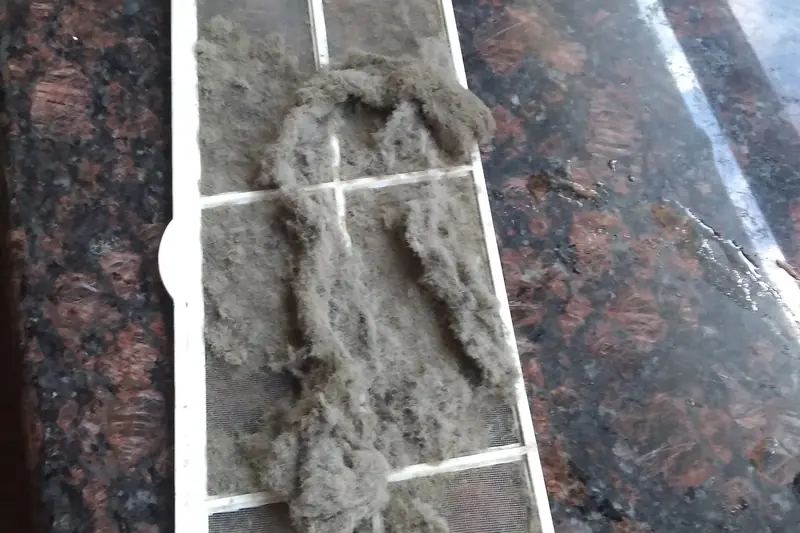
Check the filter monthly and change it when it looks dirty, and at least every 3 months. That is ENERGY STAR's rule on its heating and cooling page, which says to check especially during heavy-use months. In a dusty desert summer, or with pets, monthly changes are common; if the filter maker's interval is shorter, follow it.
Grade matters too. EPA's guide to MERV ratings suggests at least MERV 13, "or as high a rating as your system fan and filter slot can accommodate." A dense filter that the blower cannot pull through starves the coil of air, so check your system's manual. Supply-house filter and indoor air quality listings (PlumbingSupplyAndMore, owned by the people who run Swelter Almanac) list filters by size, mostly in the MERV 4 to 8 range, among other air-quality parts; read the size printed on the frame of the old filter before you shop.
A skipped filter is not just dust. Minnesota's Commerce Department notes that restricted airflow can freeze the evaporator coil, reducing efficiency and potentially damaging components, a common cause of the A/C that falls behind in July.
How do you clear the outdoor unit safely?
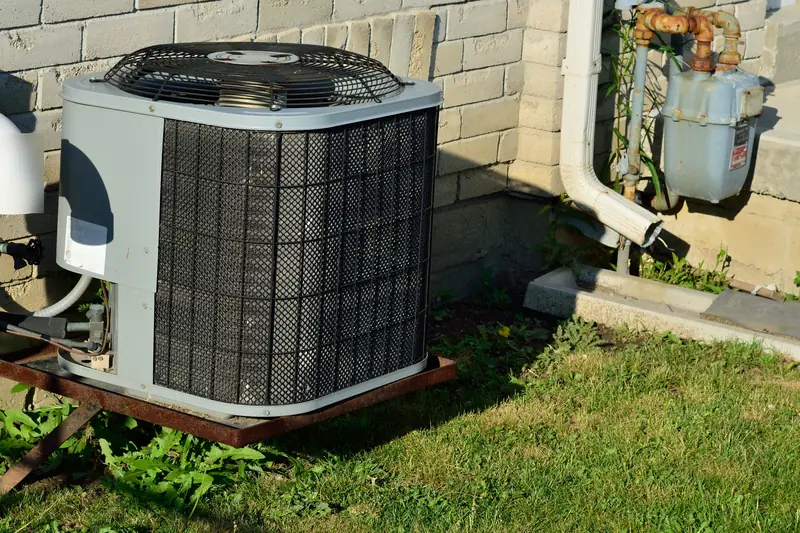
Shut the power off, pull away anything blocking airflow, and rinse the coil gently with a garden hose. Minnesota's guide says the area around the outside unit "must be kept free of foliage or anything that can block airflow." For how much open space to leave, use the clearance in the maker's installation manual; about 2 feet is common guidance, not a code.
- Set the thermostat to OFF, then switch off the indoor unit's service switch or its breaker.
- Rake out leaves, grass clippings and cottonwood fluff from the base and fins.
- Cut back shrubs and vines, and move grills, bins and stored items away.
- Rinse the coil with a garden hose on a gentle spray. A high-pressure nozzle flattens the thin fins, so leave that for the driveway.
- Wait for it to drip dry, then restore power at the disconnect and the thermostat.
Look at what the unit sits on. A pad that has sunk or tilted strains the lines and lets water pool, and condenser pad and pan listings (PlumbingSupplyAndMore, owned by the people who run Swelter Almanac) show what a level base looks like. Re-leveling a unit with refrigerant lines attached is a job for a technician.
How do you flush the condensate line?
With the power off, open the access cap on the drain line near the indoor unit and pour water through it until it flows freely out the far end. Most lines run outside near the condenser or to a nearby drain; watch that end to confirm. If your equipment manual names a cleaning solution, use that; otherwise plain water is enough for a routine flush.
It matters most in humid heat. ENERGY STAR says a plugged drain "can cause water damage in the house and affect indoor humidity levels." If you find water in the pan or on the floor, EPA's mold guide says to dry wet areas within 24 to 48 hours. A float switch that shuts the system off before an overflow is something a technician fits; the humid heat section explains where it goes, and a pump for lifting the water is covered on the dehumidifier page.
Leave the drain pan and any float switch in place. Never bypass a float switch to get cooling back; a tripped switch means water is backing up.
What should a technician's tune-up cover?
A tune-up should cover the parts an owner cannot safely reach: coils, refrigerant charge, electrical parts and the drain system. ENERGY STAR's checklist notes that dirty coils reduce the system's ability to cool your home, and that too much or too little refrigerant makes the system less efficient. Ask the contractor for a written list of what was checked and the readings taken.
Minnesota's guide lists the technician's work: clean the evaporator coil, drain pan and drain lines; inspect the control box and wiring; check refrigerant level; inspect the fan motor and blades; and check the compressor and tubing. An NREL measure guideline names faulty contactors, capacitors, condenser fan motors and compressors as reliability problems. Capacitors hold a charge even with the power off, so they stay on the technician's side of the line.
Refrigerant is closed to owners by law. EPA's Section 608 rule lets only certified technicians buy refrigerant for home systems, and a low charge means a leak to find, not a can to add. If you're unsure, call a licensed technician.
Ducts are worth a look at the same visit. ENERGY STAR says sealing and insulating ducts can improve system efficiency by as much as 20 percent, which matters most where ducts cross a hot attic; the attic ventilation page covers that.
Maintenance by the numbers
- 1 monthHow often to check the filter in heavy-use monthsENERGY STAR
- 3 monthsLongest to go between filter changesENERGY STAR
- MERV 13Suggested filter grade, if the system can take itEPA
- 24–48 hoursTime to dry a water leak to prevent moldEPA
- 20%Efficiency gain possible from sealing and insulating ductsENERGY STAR
How this page was put together
Built from ENERGY STAR's heating and cooling page and maintenance checklist, EPA's MERV and mold guides, EPA's Section 608 refrigerant sales rule, the Minnesota Commerce Department's A/C repairs and maintenance sheet and NREL's A/C diagnostics measure guideline (2013), all read in October 2026. Left out: refrigerant, electrical and capacitor procedures of any kind, fin straightening, and a fixed clearance figure for the outdoor unit, which DOE's offline pages once gave and which should come from the maker's manual.
More questions
Is a higher MERV filter always better?
Not if the system cannot move air through it. EPA suggests MERV 13 or the highest rating the fan and filter slot can handle. If airflow drops or the coil freezes after a switch, go back to the grade in the equipment manual.
Do window units need the same care?
They need their own version. Minnesota's Commerce Department says window units need clean filters, drain lines kept clear and held away from siding, and a good seal between the unit and the window. Sizing them is covered on the room unit sizing page.
Can you clean the indoor coil yourself?
The indoor coil sits inside the air handler, behind panels with wiring, so cleaning it is on the technician list in both ENERGY STAR's and Minnesota's checklists. Keeping the filter fresh is the owner's way to keep that coil clean.
How do you know the condensate line is clogged?
Water in the drain pan, a wet ceiling or closet floor near the indoor unit, or a system that shuts itself off when a float switch trips are the usual signs. In humid climates a musty smell can come first.
Does an outdoor unit need a cover in summer?
No. It needs open airflow on every side while it runs. Keep the top clear and do not wrap it in a tarp during the cooling season.
What does a spring tune-up usually include?
ENERGY STAR's contractor list covers cleaning coils, checking refrigerant charge, tightening electrical connections, inspecting the condensate drain and checking controls. Ask for the readings in writing so you can compare next year.
More on A/C in hot weather