Section · 5 pages
Fans and Ventilation in Hot Climates
Short answer
Fans and ventilation for hot climates do two jobs: a fan cools your skin so the thermostat can sit higher, and cool night air can flush heat from a house, but only where nights are dry.
Swelter Almanac, checked against the sources · updated
The forecast in brief
- With a ceiling fan running, the setpoint can go up roughly 4°F and still feel the same, per the DOE Energy Saver Guide (2022), but only if you actually raise it.
- Above 90°F indoors, the CDC says a fan can raise body temperature; move to air conditioning instead.
- Night ventilation cooled a Florida test house 3–6°F, yet indoor humidity climbed from 74% to 83% (FSEC).
- Only about 2% of Orlando summer hours were both under 78°F and under 70% humidity outdoors (FSEC).
- In a Texas side-by-side test, a powered attic fan drew about 284 W to save about 170 W of cooling (FSEC).
- The IRC base rule for vented attics is 1 square foot of net free vent area per 150 square feet of attic floor; check your local adopted code.
Moving air is the cheapest cooling there is, and the easiest to get wrong. A fan running in an empty room only adds heat from its motor, and a window opened to sticky Gulf Coast night air can leave the house damper than the A/C had it. The four pages in this section sort out which moves pay off in which climate.
How do fans cool you without cooling the room?
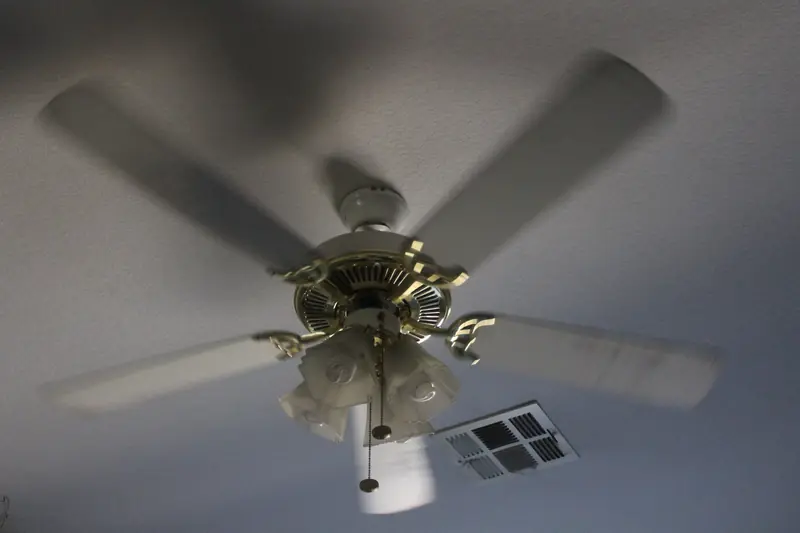
A fan makes moving air carry heat off your skin, so you feel cooler while the room's temperature stays the same. ENERGY STAR calls it a wind-chill effect and says plainly that ceiling fans cool people, not rooms, so the fan should go off when you leave.
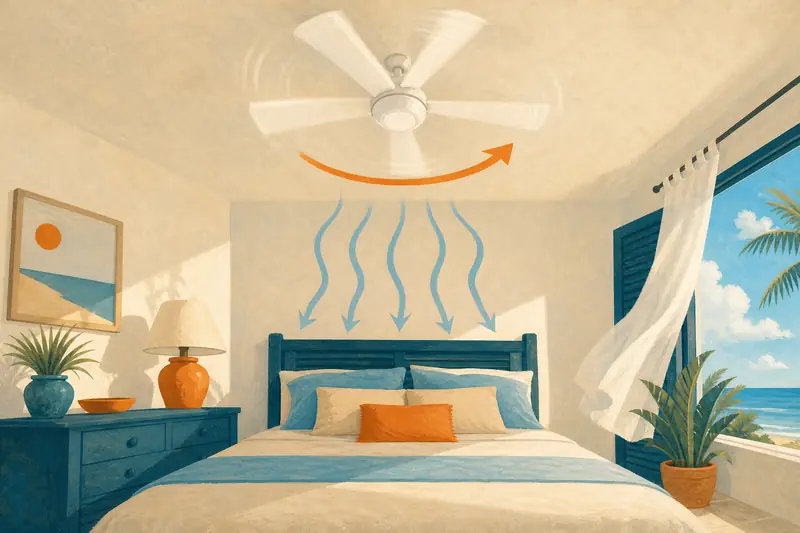
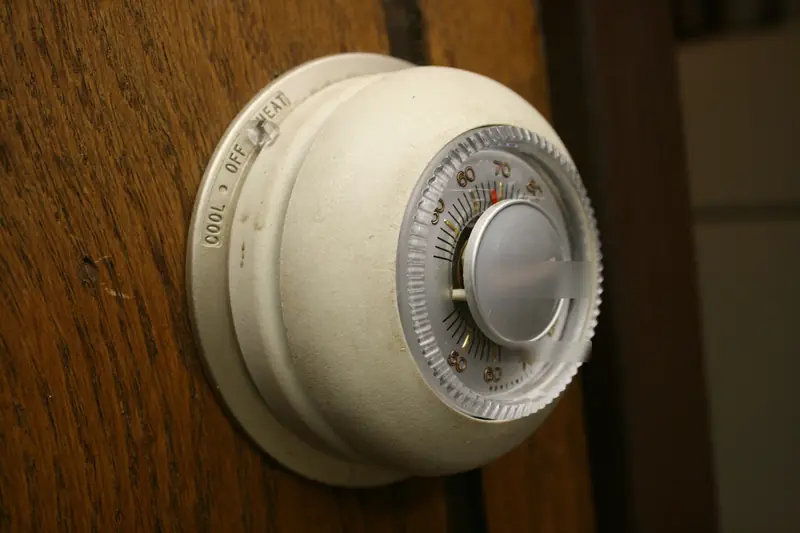
The payoff comes from the thermostat. DOE's guide puts the comfortable raise at about 4°F; FSEC's metered data from 400 Florida households found no cooling savings at all, because the occupants left their setpoints alone. In summer the blades should turn counterclockwise, looking up, pushing air straight down.
When does outside air help?
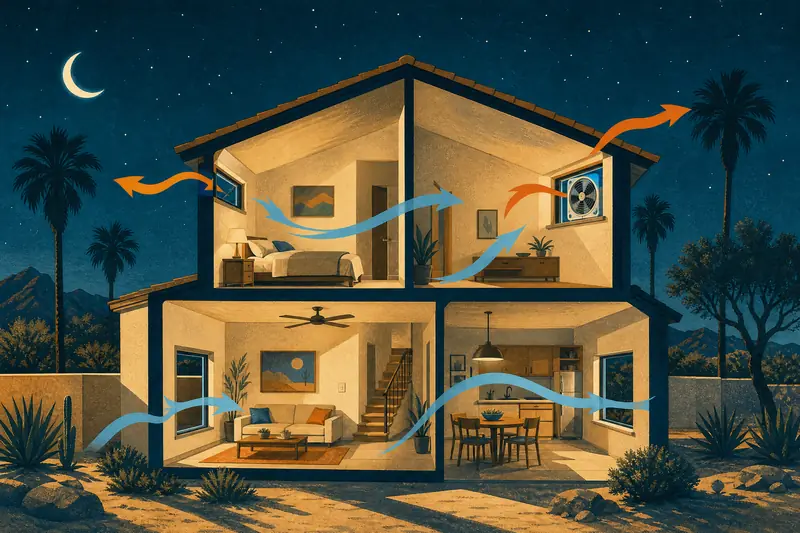
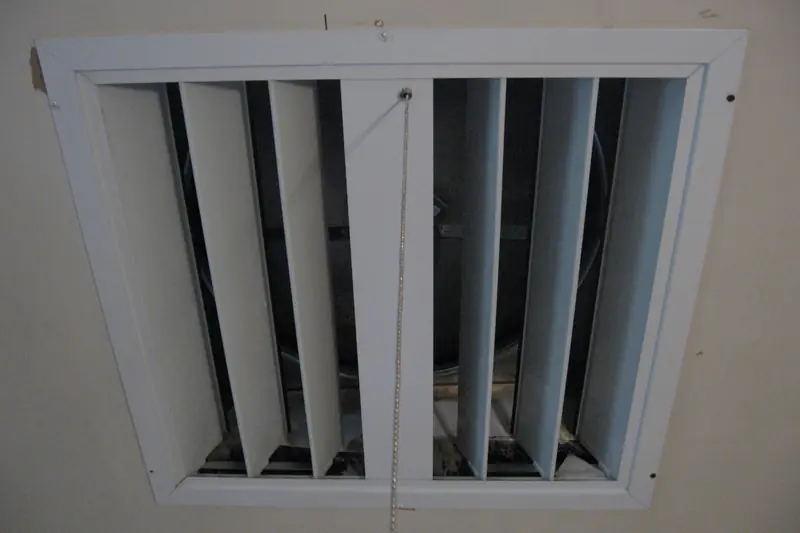
Outside air helps only when it is both cooler and drier than the air inside, which in practice means desert nights and the spring and fall shoulder seasons. A DOE Building America bulletin says a whole-house fan cools a house whenever the outdoor temperature is below the indoor one, and suggests that homes with A/C may do best using it in spring and fall.
Humidity is the catch. In Orlando, FSEC counted 63 summer hours, about 2% of the period, when outside air was under 78°F and under 70% humidity. The desert Southwest, where summer air is dry and nights run cooler than the house, is where night flushing earns its keep.


What does attic ventilation do?
Attic ventilation lets moisture and some heat escape the attic, but code vent ratios are minimums for the building, not a cooling plan for the rooms below. The IRC rule, quoted in an ICC code-change document, is 1/150 of the attic floor area, with 1/300 allowed under conditions such as balanced vents high and low.
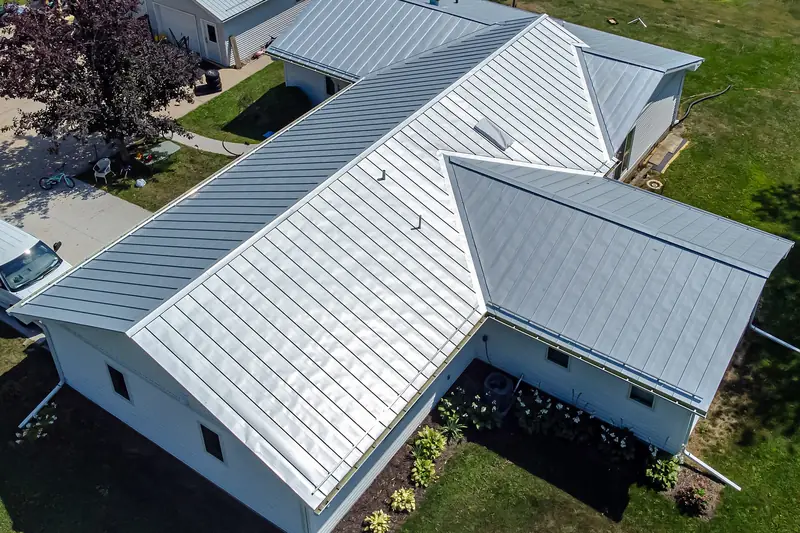
For comfort, the bigger wins sit elsewhere. FSEC found that homes with the air handler in the attic used 30% more cooling energy than homes with it in a garage or elsewhere, and recommends more insulation, a radiant barrier or a white roof to cut attic heat.

Which fans waste energy?
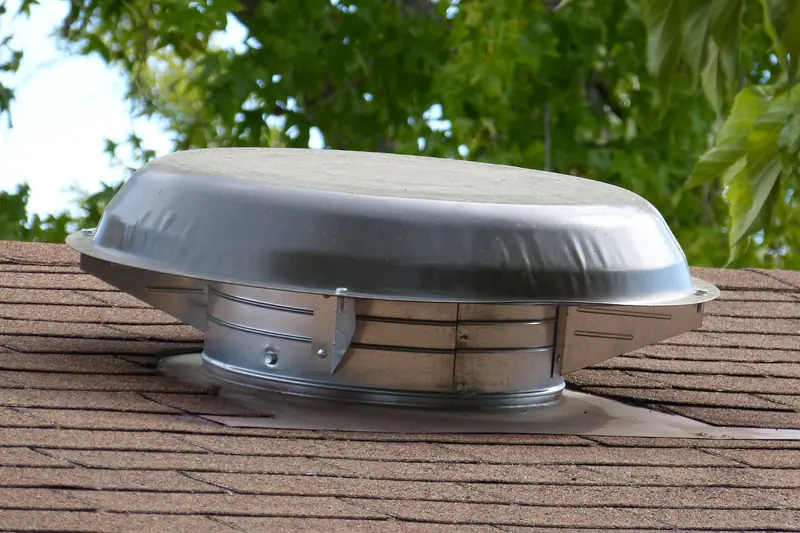
Powered attic fans are the usual waste: FSEC found they rarely save energy unless the attic has no insulation. An FSEC literature review written for Florida's building code (2005) also warns they can pull conditioned air out of the house and create negative pressure where gas appliances burn, which can draw exhaust back inside.
Ceiling fans waste energy in two quieter ways. FSEC's Florida analysis says that if the thermostat is not adjusted, cooling energy may rise by 15%, and a fan spinning in an empty room spends its 50–150 W on nobody.

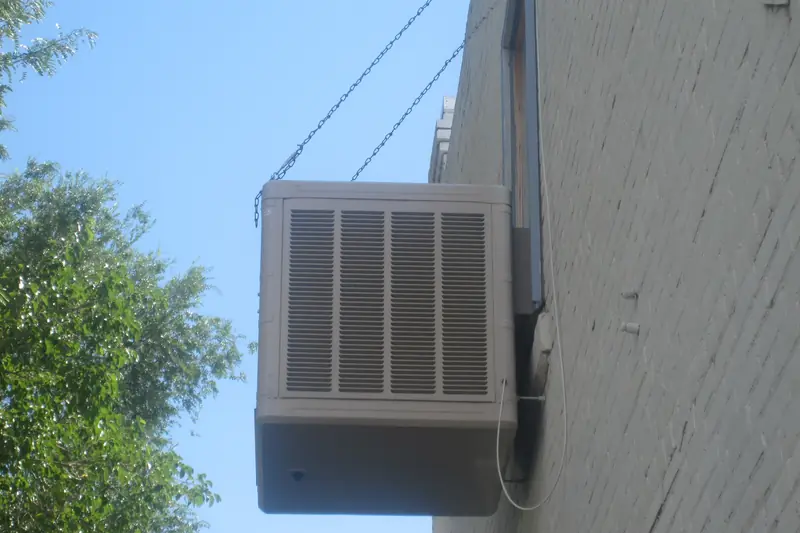
Which fan or vent fits dry heat, and which fits humid heat?
Ceiling fans work in every climate, while night air and whole-house fans belong mainly to dry places with cool nights. The table below sums up where each tool earns a place, using the sources cited on each page.
| Tool | Dry heat (desert Southwest) | Humid heat (Gulf Coast, Florida) | Main limit |
|---|---|---|---|
| Ceiling fan | Yes, with a higher setpoint | Yes, with a higher setpoint | Off in empty rooms; not the main cooling above 90°F indoors |
| Whole-house fan | Yes, on cool nights | Spring and fall only | Night humidity; open windows first |
| Window fan exhausting air | Yes, at night | Shoulder seasons | Must face away from the wind |
| Powered attic fan | No net savings | No net savings | Can depressurize gas appliance areas |
| Attic vents to code | Code minimum | Code minimum | Not a cooling strategy |
On the dry side, a whole-house fan pairs naturally with an evaporative cooler. On the humid side, every hour of outside air is moisture the A/C must later wring out, which is why a clammy house is often the first sign someone left the windows open overnight.
Moving air in numbers
- 4°FThermostat raise a ceiling fan allowsDOE Energy Saver Guide
- 90°FIndoor temperature above which fans can add heat stressCDC
- 2%Orlando summer hours cool and dry enough to ventilateFSEC
- 30%More space-cooling use in homes whose air handler sat in an atticFSEC
How this page was put together
This hub summarizes the four Moving air pages. Its figures come from the DOE Energy Saver Guide (2022), a DOE Building America whole-house fan bulletin (1999), FSEC reports on ceiling fans (1996), natural ventilation (1992) and attic ventilation (2000), an FSEC literature review for Florida (2005), ENERGY STAR ceiling fan pages, the CDC heat-health page and IRC R806 text in an ICC document, all read in October 2026. DOE's Energy Saver web pages were offline, so their figures were taken only where a DOE PDF or state mirror still carries them. Fan-sizing tables are not here: none turned up on a primary source.
More questions
Is it cheaper to run fans or the A/C?
A ceiling fan draws roughly 50–150 W on high, according to FSEC, far less than central air. The saving only shows up when the fan lets you raise the thermostat; For Florida, FSEC put the net cooling saving near 14% when fans came with a 2°F warmer setting.
Should I open the windows at night in Houston or Tampa?
Usually not in summer. FSEC's Florida test showed indoor humidity rising to 83% during night ventilation, and moisture brought in overnight has to be removed by the A/C the next day. Spring and fall nights are the better window.
Do box fans in windows help?
They can, if they blow hot air out rather than in. DOE text on the South Carolina energy office's mirror says window fans work best in windows facing away from the prevailing wind, with windows near the fan closed and far ones open.
Is an attic fan the same thing as a whole-house fan?
No. The whole-house type sits in a hallway ceiling and draws outdoor air through every open room; the attic type vents only the space under the roof, and FSEC found it seldom comes out ahead on power.
Can fans keep someone safe in a heat wave without A/C?
No. CDC says fans help only when it is below 90°F indoors; above that, go somewhere air-conditioned, and dial 2-1-1 to find a cooling center. The cooling centers page has more.
Does more attic ventilation cool the house?
Not much on its own. FSEC points to insulation, a radiant barrier or a white roof as better ways to limit attic heat, and to sealing ducts if they run through the attic.
Back to every section of the almanac