Night Flushing With Cool Night Air
Short answer
Night flushing means pulling cool outdoor air through the house after dark to chill rooms and furniture, then shutting up at morning; it works in dry places with cool nights, not in humid summer climates.
Swelter Almanac, checked against the sources · updated
Points on this page
The forecast in brief
- Morning, late evening and night air is often cool enough to replace the air indoors (DOE Building America).
- Ventilating at those hours cools the house's materials as well as its air; switch off as the day warms (DOE).
- A Central Florida survey found each month of natural ventilation in place of A/C saved an average of 777 kWh (FSEC).
- In Orlando, just 63 summer hours, about 2%, were under 78°F with outdoor humidity under 70% (FSEC).
- The EPA says to open windows to lower humidity only when it is not humid outdoors.
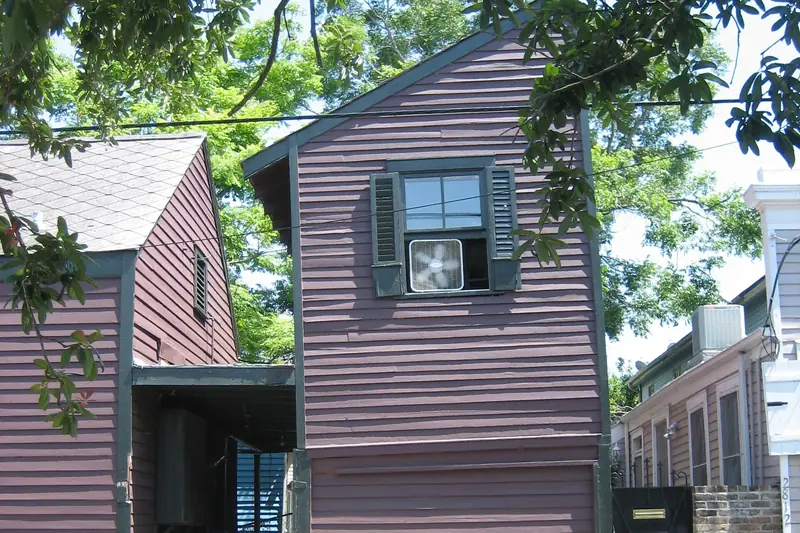
- Box fans in windows work best blowing out, in windows facing away from the prevailing wind (DOE text, South Carolina mirror).
Night flushing is the oldest cooling trick in the desert: let the cold night in, then shut the house like a cooler lid before the sun gets to work. Done in the right climate, it can carry a house through spring and fall with the A/C off. Done in the wrong one, it trades heat for damp.
What is night flushing?
Night flushing is ventilating a house with outdoor air during the cool hours, so that the air, walls, floors and furniture give up the day's heat. A DOE Building America bulletin describes the idea plainly: in the morning, late evening and night, outside air is often cooler and can replace the air inside, and running a fan at those times cools interior materials.
The stored coolness is the point. A tile floor, plaster walls and a full bookcase chilled overnight soak up heat the next afternoon, which pushes back the hour when the house turns stuffy. DOE adds that as daytime temperatures rise, the fan should go off.
When is night air cool and dry enough for night flushing?
Night air is good enough when it is cooler than the air inside and dry enough that it will not leave the house damp. The temperature half is simple: DOE says ventilating cools the house whenever outdoor temperatures are below indoor ones.
Humidity is the harder half. The FSEC study counted usable hours with two limits at once, outdoor air below 78°F and outdoor relative humidity below 70%, and the EPA's indoor air guide says to open windows for humidity control only when it is not humid outdoors. A pair of inexpensive thermometer-hygrometers, one inside and one in shade outside, answers the question each evening better than any rule of thumb.
Timing shifts more than people expect. At FSEC's Florida test house, outdoor air dropped below indoor air at about 4 PM on average, while a residential building needs the most ventilation during the cooler evening hours, exactly when the breeze tends to be weakest. That is why a fan usually beats open windows alone.
| Region | Summer nights | Spring and fall nights | Notes |
|---|---|---|---|
| Desert Southwest | Often useful | Useful | Pause during monsoon humidity |
| High, dry West Texas | Often useful | Useful | Check outdoor humidity each evening |
| Florida, Gulf Coast | Rarely useful | Sometimes useful | Humidity sets the limit |
| Humid East Texas, Southeast | Rarely useful | Sometimes useful | Keep the A/C sealed in summer |
How do you set up windows and fans for night flushing?
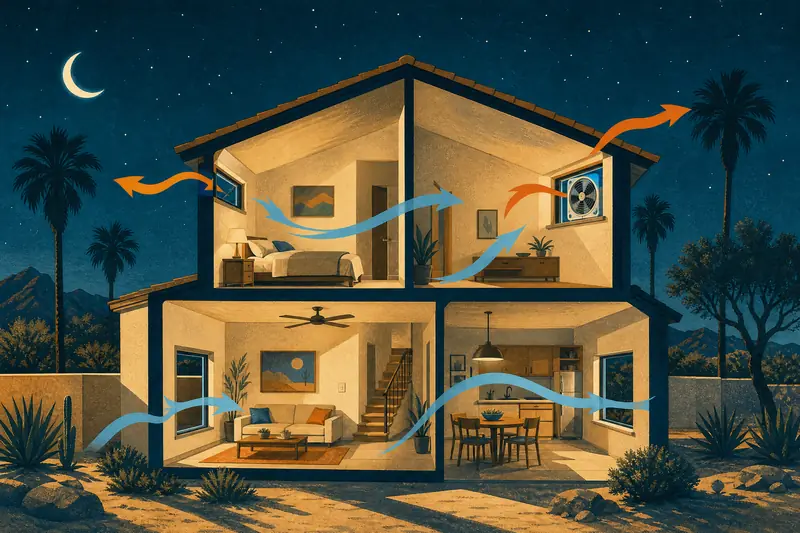
Set it up so cool air enters low on the windward side and warm air leaves high on the opposite side, pushed by a fan. DOE text on the South Carolina energy office mirror says window fans work best in windows facing away from the prevailing wind, exhausting hot air, with windows near the fan tightly closed and windows in rooms far from the fan opened, preferably on the windward side.
A simple evening routine looks like this:
- When the outdoor reading drops below the indoor one, switch the A/C off at the thermostat.
- Open ground-floor windows on the breezy side, with screens in place, and close those beside the fan.
- Put a box fan in an upstairs or downwind window blowing out, as the National Weather Service suggests for exhausting hot air.
- At dawn, or when the outdoor reading climbs back toward the indoor one, close every window and draw the shades.
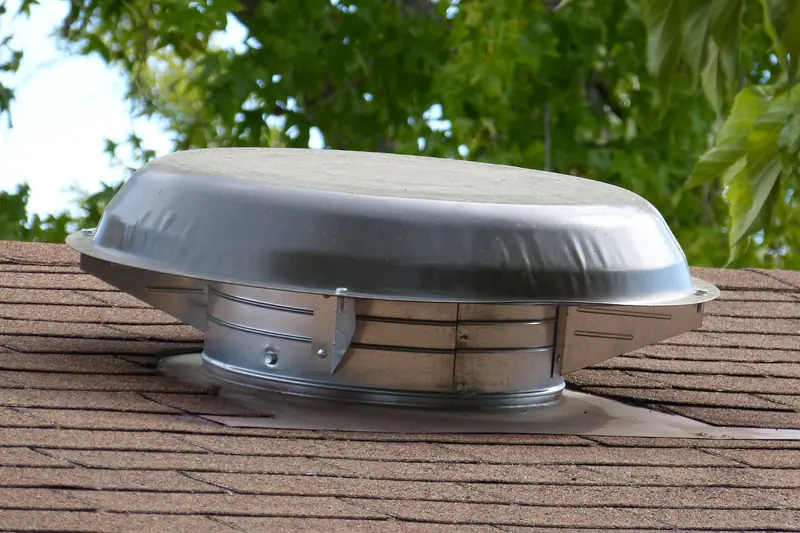
A whole-house fan does the same work faster and quieter. Open at least two windows before starting it, and see the whole-house fan page for sizing and attic vent area. In a house with an atmospheric-vent gas water heater or furnace, any exhaust fan can backdraft combustion gases, so keep carbon monoxide alarms on every level and keep the airflow path away from appliance closets. If you're unsure, call a licensed technician.
Why does night flushing fail in humid climates?
Night flushing fails in humid climates because summer night air there is cool but wet, and the moisture it brings in costs the A/C more to remove the next day than the cooling was worth. FSEC put it bluntly: high outdoor humidity places stringent limits on the usefulness of natural ventilation in Florida.
The test data show why. Fan-driven night ventilation at FSEC's Cocoa Beach house lowered indoor temperatures 3–6°F, while indoor relative humidity over those nights rose from 74% to 83%. The EPA's mold guidance asks for indoor humidity below 60%, ideally 30–50%, so 83% is moving the wrong way.
That is why Swelter Almanac recommends night flushing for dry climates with cool nights, and only for spring and fall shoulder seasons on the Gulf Coast, in Florida and in humid Texas. DOE's bulletin reaches a similar balance for homes that also have A/C, suggesting seasonal spring and fall use. If a humid house already feels clammy, the humid heat section and the page on an A/C that is not dehumidifying come first.
How do you keep the cool in during the day?
Keep the cool in by closing up the house before the outdoor air warms past the indoor air, and by blocking sun on the east and west windows. Windows, doors and shades go shut by mid-morning; the chilled floors and walls then do the work.
Shade the glass from outside where you can. The USDA Forest Service found that trees shading a home's west side gave the largest cooling savings, and three trees, two west and one east, cut annual cooling energy 10–50% in its simulations. For the windows themselves, NFRC labels list the solar heat gain coefficient, and a lower number lets in less solar heat; the window shading page covers both.
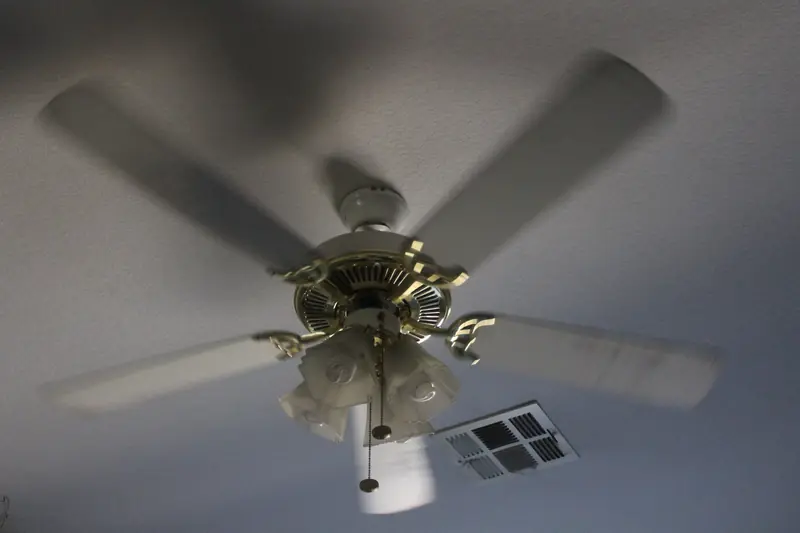
Inside, ceiling fans keep the stored coolness feeling useful into the afternoon, as long as you raise the thermostat when the A/C comes back on. The ceiling fan direction page explains the counterclockwise setting. When indoor air passes 90°F, the CDC says fans stop protecting you; get to an air-conditioned building, and the 2-1-1 helpline can name the nearest cooling center.
Night air in numbers
- 777 kWhAverage saving per month of ventilation instead of A/CFSEC
- 4 PMWhen outdoor air fell below indoor air, on averageFSEC
- 2%Share of Orlando summer hours inside both FSEC limitsFSEC
- 60%Indoor humidity ceiling the EPA asks forEPA
How this page was put together
Sources behind this page, each read in October 2026: the 1999 Building America bulletin on whole-house fans from DOE; a 1992 FSEC study of how Florida houses respond to natural ventilation; DOE wording kept online by South Carolina's regulatory staff; EPA guidance on indoor air and mold; National Weather Service and CDC heat advice; USDA Forest Service shade-tree research; and NFRC's label terms. DOE's own natural ventilation web page could not be loaded, so none of its wording appears. No primary source gave a dew-point cutoff, so none is offered.
More questions
What time should night flushing start?
Start when the outdoor thermometer reads below the indoor one, which can be late afternoon in some places; FSEC's Florida house crossed over near 4 PM on average. In desert summers it is often later in the evening.
Is it safe to leave windows open overnight?
Use windows that lock partly open, keep screens in, and favor upstairs or hard-to-reach openings. If that is not possible, a whole-house fan with fewer, smaller openings is an alternative.
Does night flushing work with a swamp cooler?
They suit the same dry climates. Run the evaporative cooler through the hot afternoon and switch to plain outdoor air once the night cools; the swamp cooler vs air conditioner page covers the cooler side.
What about the monsoon in Arizona?
Monsoon weeks bring humid air, and University of Arizona extension notes that evaporative cooling falters then too. On sticky monsoon nights, keep the house closed and let the A/C handle moisture.
Will night flushing work in a two-story house?
Often better than in a single story, because warm air rises to the upper windows. Exhaust from the top floor and bring air in low.
Can pollen or smoke make it a bad idea?
Yes. Pulling outdoor air through the house brings whatever is in it, so skip night flushing when wildfire smoke or heavy pollen is in the forecast and run the A/C with a clean filter instead.
Keep reading