Section · 5 pages
Running Central A/C in Extreme Heat
Short answer
Central A/C in extreme heat works best at the warmest comfortable setting, with a clean filter and a clear outdoor unit, and it is designed to fall slightly behind on days past your county's design temperature.
Swelter Almanac, checked against the sources · updated
The forecast in brief
- ENERGY STAR's schedule begins at 78°F for home hours and adds 7°F or more when everyone is out.
- Systems are sized for the 1% cooling design temperature: 111°F in Maricopa County, 101°F in Dallas County, 92°F in Miami-Dade (ENERGY STAR).
- ENERGY STAR: look at the filter monthly in summer, replace it within 3 months at most.
- Past 90°F inside, a fan no longer protects people (CDC); dial 2-1-1 to find air conditioning.
- New split central A/C in the Southeast and Southwest must meet 14.3 SEER2 below 45,000 Btu/h (10 CFR 430.32).
- The IRS says 25C and 25D tax credits ended for 2026 installs.
What setting makes sense in a heat wave?
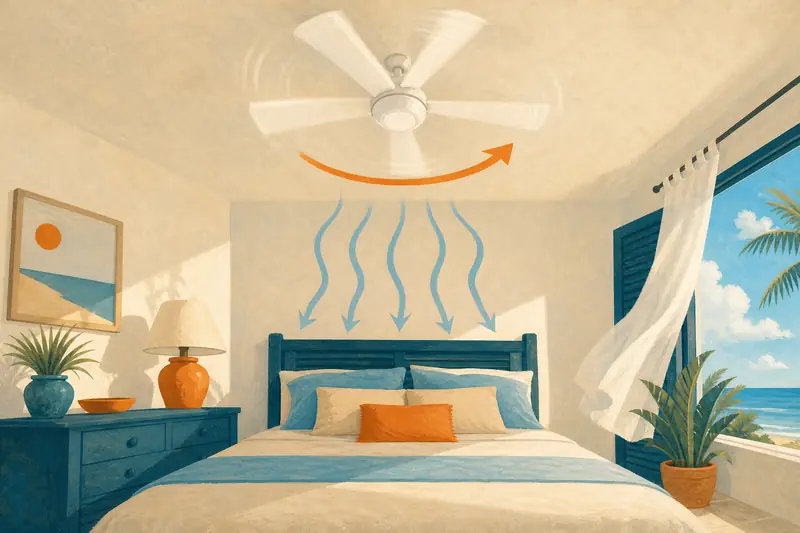
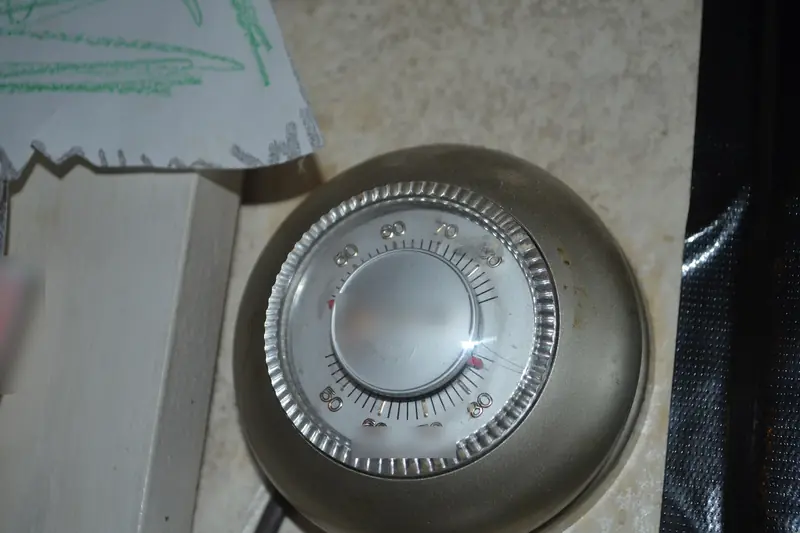
The warmest setting that keeps people comfortable and safe, with 78°F as ENERGY STAR's starting point. Its thermostat schedule uses 78°F or warmer for home hours and goes 7°F or more higher when nobody is in. DOE's 2022 guide simply says "as high as is comfortable." In a heat wave, comfort for older or sick household members comes first; savings come second.
A lower number does not cool a single-stage system faster; it just runs longer. Pre-cooling before the utility's peak window can trim a time-of-use bill, though DOE Building America found it rarely saves energy on its own.
Why can't the A/C keep up?
Because it was sized for your county's design day, and record days run hotter. ENERGY STAR's design temperature guide sets limits such as 116°F for Clark County, Nevada, and 97°F for Harris County, Texas. Above those, a healthy system runs nonstop and the house warms a few degrees.
The "A/C can only do 20 degrees" idea is a rule of thumb with no engineering source. Dirty filters, blocked registers and leaky ducts make the gap worse, and those are worth checking before blaming the weather.

Which checks can you make yourself?
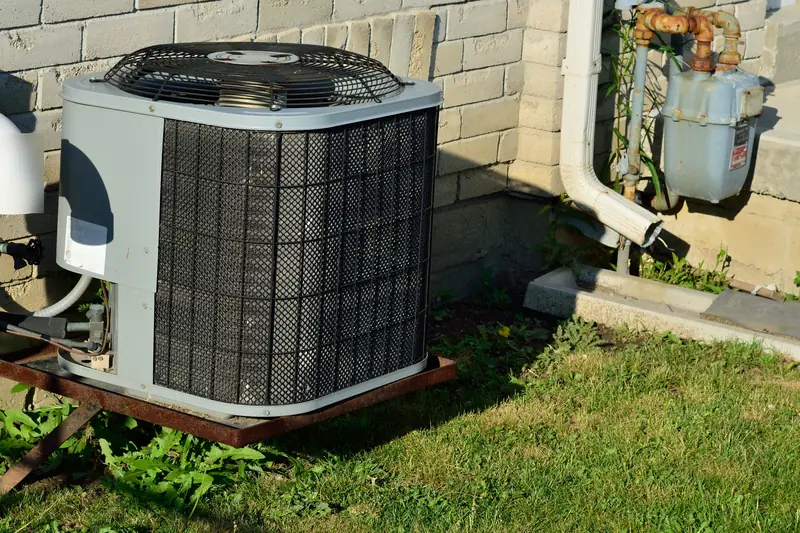
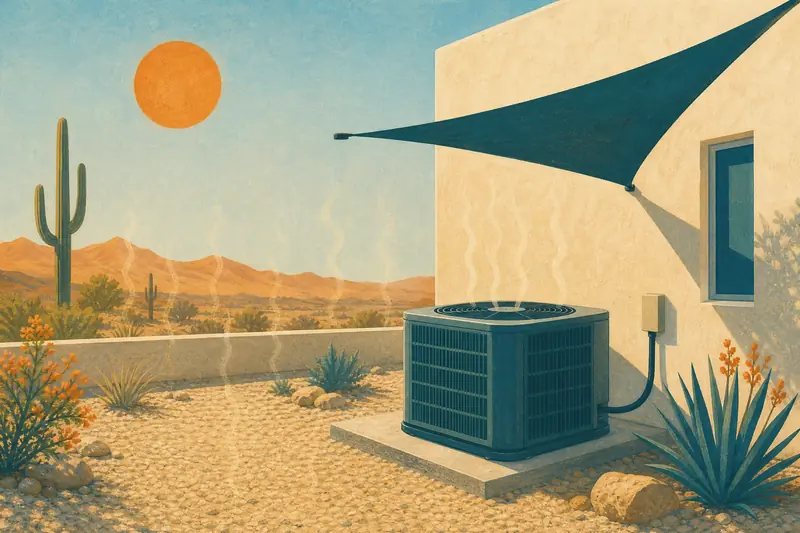
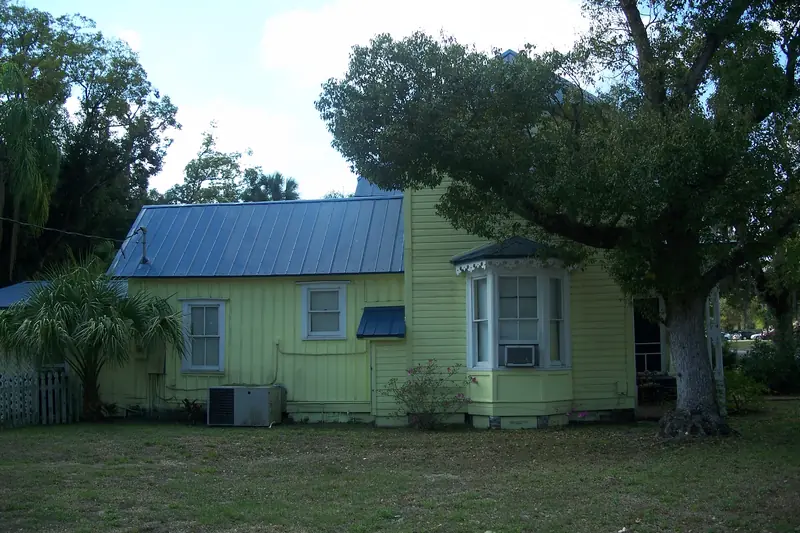
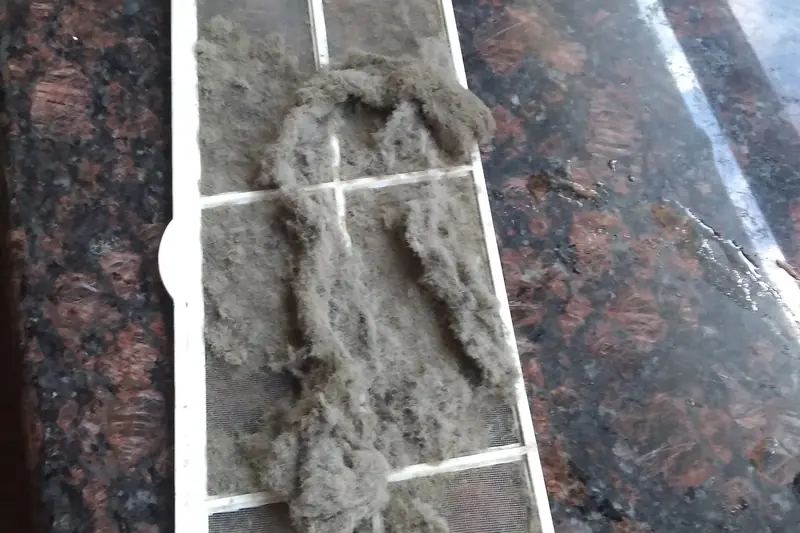
The filter, the outdoor unit, the condensate drain, the thermostat and one breaker reset, always with the power off first. ENERGY STAR's maintenance checklist gives owners the filter and leaves coils, refrigerant and electrical work to a contractor. The Minnesota Commerce Department adds clearing plants away and gently hosing the outdoor coil.
Set the thermostat to OFF and switch off the breaker or outdoor disconnect before touching anything. Reset a tripped breaker only once. Never chip ice off a frozen coil, never bypass a float switch, and leave capacitors and refrigerant alone. If you're unsure, call a licensed technician.
What happens if the A/C fails?
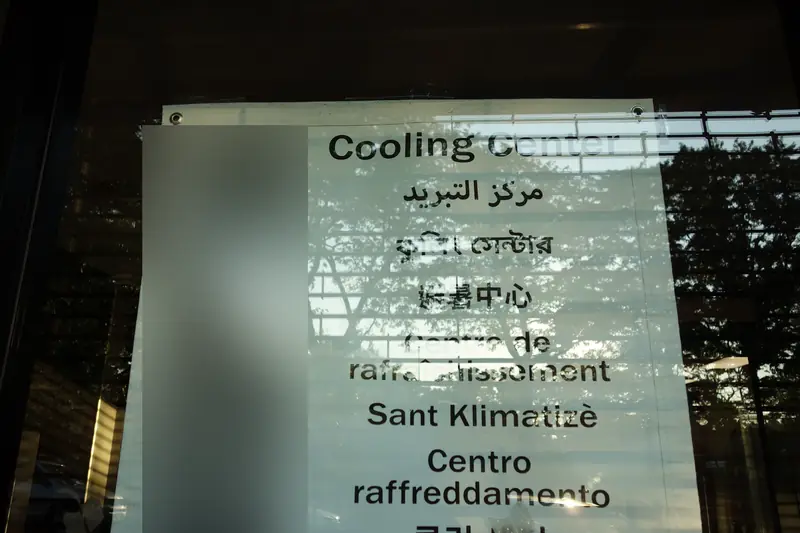
People come first: get anyone at risk into air conditioning, and call 911 if someone is confused or runs a temperature past 103°F, two heat stroke signs (Ready.gov). The CDC says fans are fine below 90°F indoors but can raise body temperature above it; dial 2-1-1 for a cooled place nearby.
Then run the safe checks and line up a licensed technician. If you use a portable generator during an outage, run it outdoors only, at least 20 feet from the house, with CO alarms on every level (CPSC).
What changed for new systems in 2025 and 2026?
As of October 28, 2026, tax credits ended, efficiency floors held, and new systems moved to lower-GWP refrigerants. These rules change; check the agency pages before you sign a contract.
- Tax credits. Per the IRS OBBB FAQ, the 25C home improvement credit stopped with equipment put in service by the last day of 2025, and 25D closed to spending after that date too. Systems installed in 2026 do not qualify.
- Rebates. DOE's Home Energy Rebates page says rebates are "available in select states." Ask your state energy office what is open.
- Efficiency. Under 10 CFR 430.32, split central A/C installed in the Southeast and Southwest needs 14.3 SEER2 below 45,000 Btu/h and 13.8 SEER2 at 45,000 Btu/h and up. The Southwest (Arizona, California, Nevada, New Mexico) adds EER2 minimums.
- Refrigerant. EPA's sector table limits new home A/C and heat pump systems to refrigerants with a GWP under 700 from January 1, 2025. After EPA's May 2026 rule, there is no installation deadline for systems whose components were all made or imported before 2025, and R-410A parts can still repair existing systems.
Common replacements are R-454B (GWP 470) and R-32 (GWP 675), both listed by EPA's SNAP program. Only an EPA Section 608 certified technician should connect or charge any of them.
| Region | Under 45,000 Btu/h | 45,000 Btu/h and up | Extra requirement |
|---|---|---|---|
| Southeast (incl. FL, GA, LA, TX) | 14.3 SEER2 | 13.8 SEER2 | None |
| Southwest (AZ, CA, NV, NM) | 14.3 SEER2 | 13.8 SEER2 | EER2 floors: 11.7 or 9.8 (under 45k), 11.2 or 9.8 (45k+) |
| North (rest of the country) | 13.4 SEER2 | 13.4 SEER2 | None |
The numbers behind this section
- 78°FENERGY STAR cooling starting point when homeENERGY STAR (2009)
- 111°FMaricopa County cooling design limitENERGY STAR
- 3 monthsLongest gap between filter changesENERGY STAR
- 14.3 SEER2Southern minimum for split A/C under 45,000 Btu/heCFR
- 700Refrigerant GWP cap for new home A/C systemsEPA
How this page was put together
This section draws on ENERGY STAR's 2009 heating and cooling guide, design temperature guide and maintenance checklist, the DOE Energy Saver Guide (2022), the Minnesota Commerce Department, the CDC, Ready.gov and CPSC, the IRS OBBB FAQ, DOE's Home Energy Rebates page, 10 CFR 430.32 on eCFR and EPA's HFC sector table and SNAP list, read in October 2026; the money and refrigerant rules are dated October 28, 2026. Left out: equipment prices, brand comparisons, a state-by-state rebate list (none is published) and any refrigerant or electrical work by owners.
More questions
Is it bad for the A/C to run all day in extreme heat?
No. On days hotter than the design temperature a correctly sized system is expected to run continuously. What matters is that the air coming out stays cool and nothing ices up.
Can you still buy an R-410A system in 2026?
New systems must use refrigerant with a GWP under 700, but EPA's 2026 rule removed the installation deadline for systems whose components were all made or imported before January 1, 2025. Existing R-410A systems can still be repaired with R-410A parts.
Does a new central A/C qualify for a federal tax credit in 2026?
No. The 25C credit closed with the end of 2025, and a system finished in 2026 is outside it (IRS). State or utility rebates may still exist; ask your state energy office.
Is a higher SEER2 rating worth it in the Sun Belt?
Long cooling seasons mean more hours at whatever efficiency you buy, and the federal floor of 14.3 SEER2 already applies to smaller split systems in the South. Ask the contractor for a Manual J load calculation first, since an oversized high-SEER2 system still short-cycles.
Should you cover windows during a heat wave?
Yes, on the sunny sides. Blocking sun before it enters cuts the load the A/C must remove; the window shading page covers screens, film and trees.
Is a swamp cooler better than A/C in the desert?
In dry heat it can carry much of the summer, but University of Arizona Extension notes it falters during the humid monsoon weeks. The dry heat section compares the two.