Ductless Mini-Splits for One Room
Short answer
A ductless mini split cools one hot room with a wall-mounted head and an outdoor unit joined by refrigerant lines, no ducts needed; an EPA 608-certified technician must make the refrigerant connections.
Swelter Almanac, checked against the sources · updated
This page links to PlumbingSupplyAndMore, owned by the people who run Swelter Almanac. Those links are examples only; no figure here depends on them. About these links
Points on this page
The forecast in brief
- Most mini-splits sold today are heat pumps with one or more indoor heads on a wall or ceiling and an outdoor unit, and ENERGY STAR describes them as a replacement for window units (ENERGY STAR).
- With no ducts, it skips the 20 to 30 percent of air a typical duct system loses to leaks and poor connections (ENERGY STAR).
- Size it with a Manual J load calculation, not by guesswork, per ENERGY STAR.
- Attaching gauges or adding or removing refrigerant is work only an EPA Section 608 certified technician may do (EPA).
- New residential systems need refrigerant with a GWP under 700 since January 1, 2025; R-454B is 470 and R-32 is 675 (EPA).
- Dated October 28, 2026: per the IRS, equipment placed in service once 2025 ended gets no 25C home improvement credit.
How does a ductless mini split work?
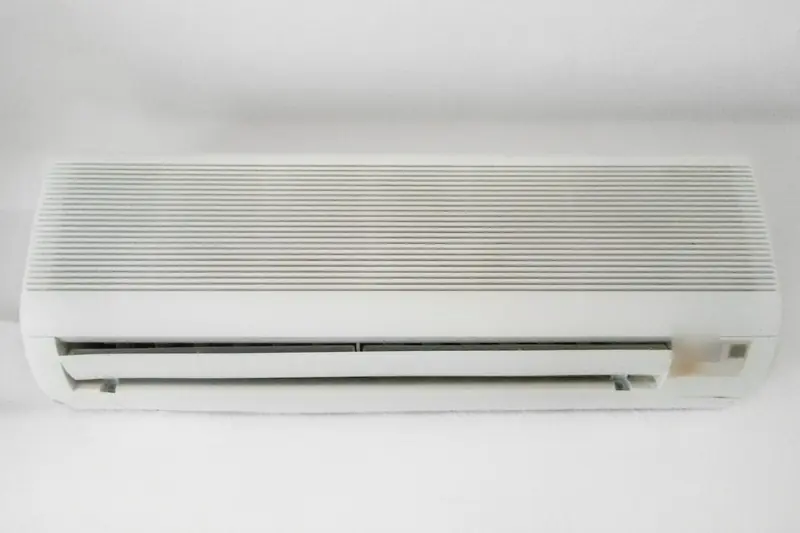
A ductless mini split moves heat out of a room through refrigerant lines instead of ducts: the indoor head absorbs heat from the room air, and the outdoor unit releases it outside. ENERGY STAR describes the setup as a head unit, or several, mounted on an interior wall or ceiling with an accompanying unit outside. In winter the same system runs in reverse as a heat pump.
The bundle connecting the two halves is the line set: copper refrigerant lines and a control cable, usually wrapped together with the condensate drain and run through a small hole in the wall. The head has its own fan and filter, so each room gets its own temperature setting.
ENERGY STAR adds a reminder worth keeping in mind for a single head: heat rises and cool air sinks, and air moves poorly through an open doorway and not at all through a closed one. One head cools its own room well; it will not cool the bedrooms down the hall.
Is a mini split more efficient than a window unit?
It can be, but there is no published percentage to quote, because the two are rated by different federal tests. A room air conditioner is labeled by CEER; a split-system heat pump, the class most mini-splits fall in, must meet at least 14.3 SEER2 nationwide under 10 CFR 430.32. The numbers measure different things and cannot be lined up.
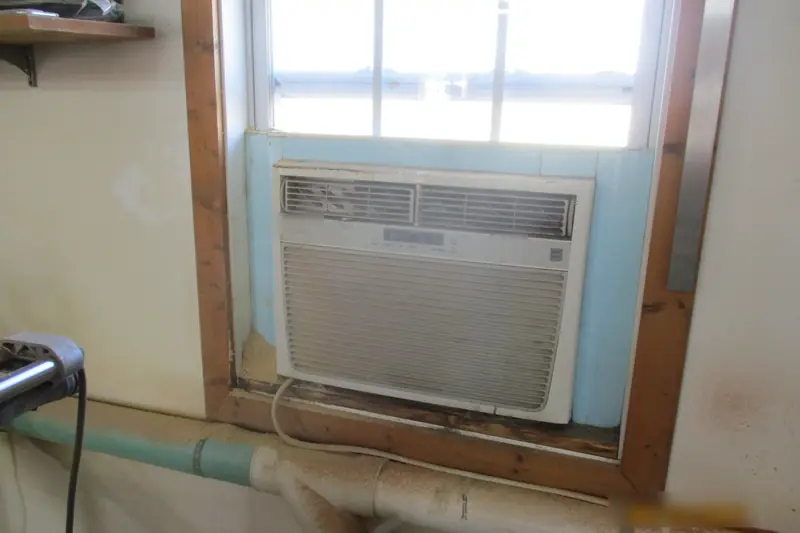
What the sources do support is where the losses go. A window cabinet that is poorly fitted leaks as much air as a 6-square-inch hole, according to ENERGY STAR, and a mini-split leaves the window closed and sealed. Compared with a ducted system, it avoids the 20 to 30 percent of air that leaky ducts lose, which matters most when ducts run through an attic under a roof that can top 160°F in hot climates (PNNL).
ENERGY STAR calls variable-speed compressors the much more efficient option in room units, and the same question is worth asking about any mini-split you are quoted.
| Option | Who installs it | Window stays usable | Rating to compare | Refrigerant work |
|---|---|---|---|---|
| Window unit | You, per the manual | No (except U-shaped or saddle models) | CEER | Sealed unit; no field connections |
| Portable unit | You, per the manual | Partly; hose kit in the opening | SACC and CEER | Sealed unit; no field connections |
| Ductless mini-split | Licensed HVAC contractor | Yes | SEER2 (14.3 federal floor for split heat pumps) | Field connections by an EPA 608 technician |
What does installation involve?
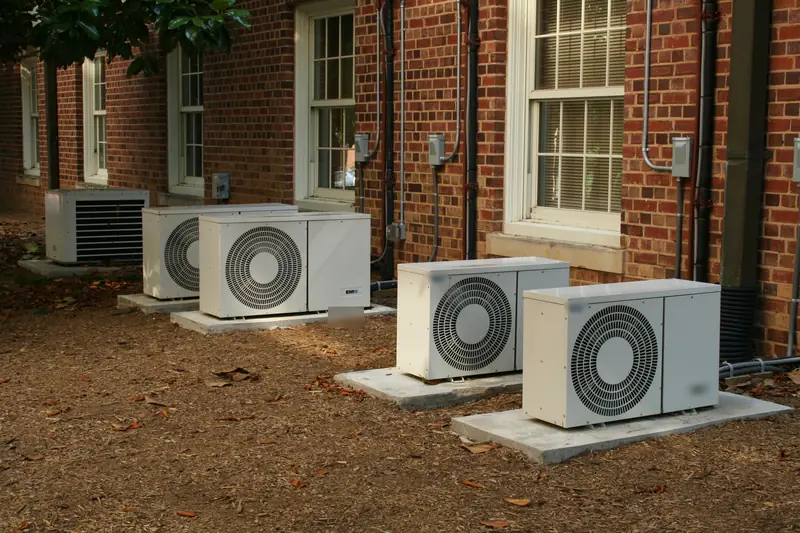
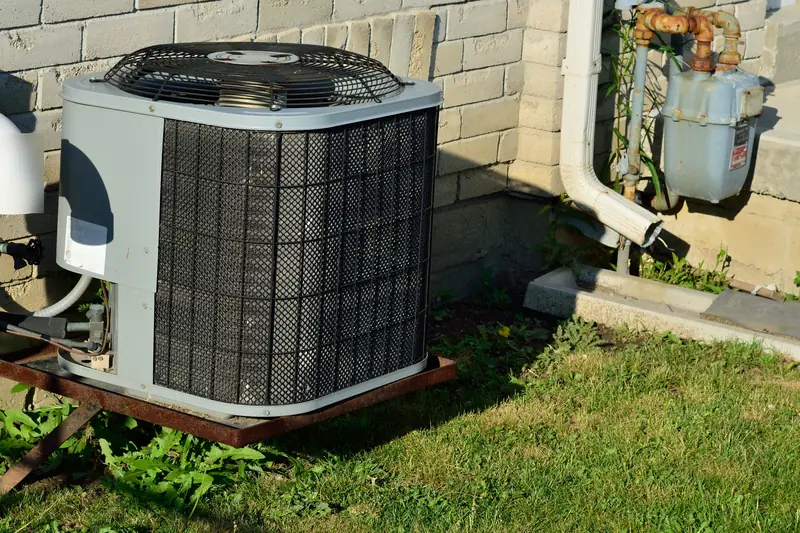
Installation is a contractor job from start to finish: a load calculation, mounting the head and the outdoor unit, running and connecting the line set, wiring, a condensate drain and putting the system into service. ENERGY STAR says your contractor should verify the size using "Manual J", a calculation of the cooling and heating a space needs, and should place the outdoor unit with unobstructed airflow, away from shrubs and tight corners.
The refrigerant step is regulated. EPA rules say anyone who attaches gauges, or adds or removes refrigerant, counts as a technician who must hold Section 608 certification, and venting refrigerant on purpose is prohibited. Only certified technicians may buy refrigerant for this equipment. If you're unsure, call a licensed technician.
Before you sign, ask the contractor for the Manual J result for the room, where the line set and drain will run, how the outdoor unit will be mounted and whether a permit is needed.
Seeing the parts helps you follow the quote. Supply-house listings for mini-split systems (PlumbingSupplyAndMore, owned by the people who run Swelter Almanac) and refrigerant line sets and covers (PlumbingSupplyAndMore, owned by the people who run Swelter Almanac) show the equipment a technician fits; they are not a DIY invitation.
When is a mini split worth it for one room?
A mini-split is worth it for a room you cool every summer that central air does not reach well, or where ducts would be long, hot or impossible. ENERGY STAR lists additions, garages and outbuildings, older homes with no ductwork, hot spots such as home offices, and rooms next to unconditioned space, such as a guest room above a garage. In the Sun Belt, the room over the garage is the classic case.
It is less worth it as a heat-wave rescue. A window unit can be in the window the same afternoon; a mini-split needs a contractor visit, a load calculation and possibly a permit. For a rental or a room cooled a few weeks a year, compare window and portable units first.
Check the whole house before adding equipment. If the room is hot because the attic above it is poorly insulated or its supply duct is leaking, those fixes are covered in keeping the upstairs cool and attic ventilation. A head sized for a room that later gets better insulation ends up oversized, which in humid heat means clammy air.
On money, keep it short and dated. As of October 28, 2026, IRS guidance says the 25C energy efficient home improvement credit ended with equipment placed in service by December 31, 2025 (IRS FAQ), so a 2026 install does not qualify. Ask your utility and your state energy office about any rebates.
What should you know about refrigerants?
New residential split systems must use a refrigerant with a global warming potential under 700, under EPA rules in effect from January 1, 2025 (EPA sector table). EPA's list of acceptable substitutes gives R-454B a GWP of 470 and R-32 a GWP of 675, both A2L refrigerants accepted with use conditions; the older R-410A is 2,090.
If you already have R-410A equipment, it can still be repaired with R-410A parts. Per EPA's May 2026 rule and its sector table updated August 2026, there is no installation deadline for systems whose components were all made or imported before January 1, 2025.
Refrigerant is never a homeowner job. A system that is low has a leak, and finding and fixing it takes a certified technician. EPA also warns that refrigerants sold as "R-22a" are highly flammable and not approved for home air conditioners.
How do you run a mini-split well in the heat?
Pick a steady setting and leave it, use "cool" rather than "auto", and clean the filters when they look dirty or the filter light comes on; those are ENERGY STAR's own use tips. Set the fan to auto or a low speed that still reaches across the room. ENERGY STAR's general starting point for summer is about 78°F; see summer thermostat settings for how far up you can push it.
Keep the outdoor unit clear of plants and debris, and leave anything inside the cabinet to the technician. If the cooling stops in a heat wave, heat safety at home covers what to do next.
Mini-split figures
- 20–30%Share of duct air a typical house leaks awayENERGY STAR
- 14.3 SEER2Federal minimum, split heat pumpseCFR 10 CFR 430.32
- 700GWP limit, new residential systems from 2025EPA
- 470GWP of R-454BEPA SNAP
How this page was put together
Based on the ENERGY STAR ductless heating and cooling page and duct-sealing page, EPA Section 608 technician, refrigerant-sales and homeowner pages, EPA's HFC technology-transition sector table (updated 2026) and SNAP refrigerant list, the federal efficiency standards at 10 CFR 430.32, and the IRS FAQ on Public Law 119-21 (2025), all read in October 2026. Left out: installed-cost figures (DOE's mini-split page was offline and no primary source replaced it), the ENERGY STAR page's tax-credit text, which predates the 2025 law, and brand names.
More questions
Can you install a mini-split yourself?
Not the refrigerant part. EPA rules make connecting gauges and adding or removing refrigerant technician work that requires Section 608 certification. Mounting, wiring and permits also usually call for licensed trades.
How big a mini-split does one room need?
ENERGY STAR says the contractor should size it with a Manual J load calculation. A room chart made for window units is a rough check, not a substitute. Oversizing leaves humid rooms clammy.
Does a mini-split work in 110°F heat?
Equipment is designed around a local design temperature, and on the hottest few hours a properly sized system may run nonstop without reaching the setpoint. Ask the contractor what outdoor design temperature the Manual J used. See why systems fall behind in A/C that can't keep up.
Where should the indoor head go?
High on a wall with a clear throw across the room, away from direct sun on the head itself. ENERGY STAR notes that heat rises and cool air sinks, so a single head cools its own room best. Open doors help only a little.
What happens to a mini-split's water?
The indoor head collects condensate that drains outside or to a pump. A blocked drain can drip down the wall, so ask where it runs and check the outlet each spring.
Related reading


Back to every section of the almanac