When the A/C Can't Keep Up
Short answer
An AC that can't keep up with the heat is often working as designed: systems are sized for a local design temperature, such as 111°F in Maricopa County, not for record highs.
Swelter Almanac, checked against the sources · updated
This page links to Central Plumbing HVAC, PlumbingSupplyAndMore, owned by the people who run Swelter Almanac. Those links are examples only; no figure here depends on them. About these links
Points on this page
The forecast in brief
- ENERGY STAR tells designers to size cooling for the 1% cooling design temperature from ACCA Manual J, not for the hottest day on record.
- ENERGY STAR's design limits run from 92°F in Miami-Dade to 111°F in Maricopa County and 116°F in Clark County, Nevada.
- Manual J's indoor design condition is 75°F and 50% humidity (DOE Building America), so a 72°F target on a record day is outside the design.
- The "20-degree rule" has no engineering source; the closest primary text is a Phoenix rental rule of 82°F or 20 degrees below outside.
- A clogged filter can freeze the indoor coil (Minnesota Commerce Department); low refrigerant means a leak and a certified technician.
- Leaks in a typical duct system waste 20 to 30 percent of the airflow, says ENERGY STAR, and the loss bites hardest on the hottest afternoons.
Why can't the AC keep up with the heat?
Because almost every central system is sized for a typical hot day in your county, not the record. ENERGY STAR's design temperature guide tells designers to use the ACCA Manual J 1% cooling design temperature. On the small share of hours hotter than that, a correctly sized unit runs nonstop and the indoor temperature drifts up.
That is a feature, not a flaw. A bigger unit would short-cycle the rest of the summer: ENERGY STAR warns that a system that is too large "will not keep your home comfortable" because of frequent on/off cycling, and in humid climates it leaves the air damp. So on a 115°F Phoenix afternoon, a house that holds 80°F with the system running steadily may be a healthy system meeting its limit.
What is a design temperature?
A design temperature is the outdoor reading a cooling system is built to handle, set so that only about 1% of hours run hotter. ENERGY STAR publishes the limit for every county, taken from ASHRAE and Manual J data. The indoor side is fixed too: DOE Building America's sizing guide uses Manual J's 75°F and 50% relative humidity.
The same guide says equipment capacity should not exceed the calculated load by more than 15%. So the designer aims for 75°F indoors on a 111°F Maricopa day, with little spare capacity on purpose. Hold out for that Manual J calculation whenever a contractor quotes a replacement; the room-by-room sizing page covers the window-unit version.
| County | Design limit (°F) | Climate |
|---|---|---|
| Clark County, NV (Las Vegas) | 116 | Dry heat |
| Maricopa County, AZ (Phoenix) | 111 | Dry heat |
| Pima County, AZ (Tucson) | 109 | Dry heat |
| Dallas County, TX | 101 | Mixed |
| Harris County, TX (Houston) | 97 | Humid heat |
| Orleans Parish, LA | 93 | Humid heat |
| Miami-Dade County, FL | 92 | Humid heat |
Is the 20-degree rule real?
Only as a rule of thumb; no engineering standard says an A/C can cool exactly 20°F below outdoor air. What a system can hold depends on its design temperature, the house's heat gain and the humidity, which is why a Miami system designed around 92°F and a Las Vegas system designed around 116°F behave so differently.
The primary-source "20 degrees" is a landlord rule. The Arizona courts' legal FAQ says a Phoenix rental A/C must cool to 82 degrees, or at least 20 degrees below outside. Dallas sets its own floor for single-family rentals: at least 15 degrees below outside, per the city's rental registration FAQ, and never above 85°F. Those are minimums a landlord must meet, not a measure of what your equipment should do.
Which checks can you make safely?
Five checks are safe for an owner, and each starts with the system switched off at the thermostat first. Work through them in this order before anyone opens a panel.
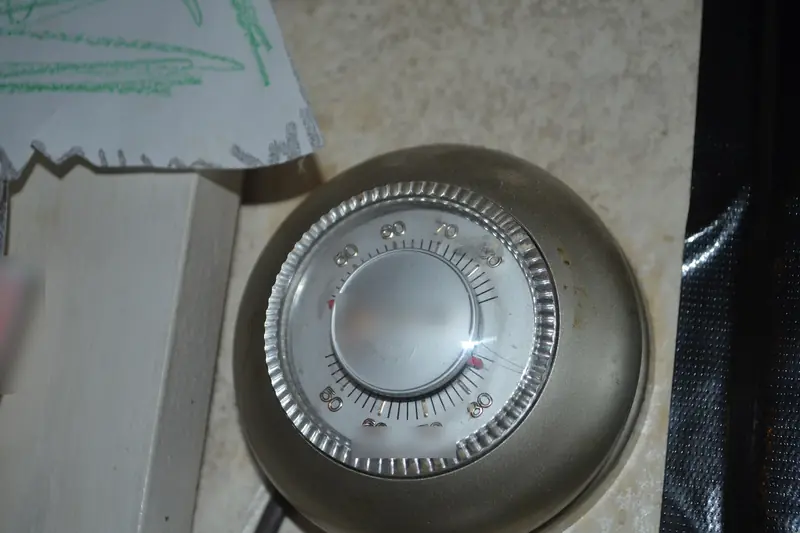
- Thermostat. Confirm it says COOL, the setting is below room temperature and the batteries are fresh.
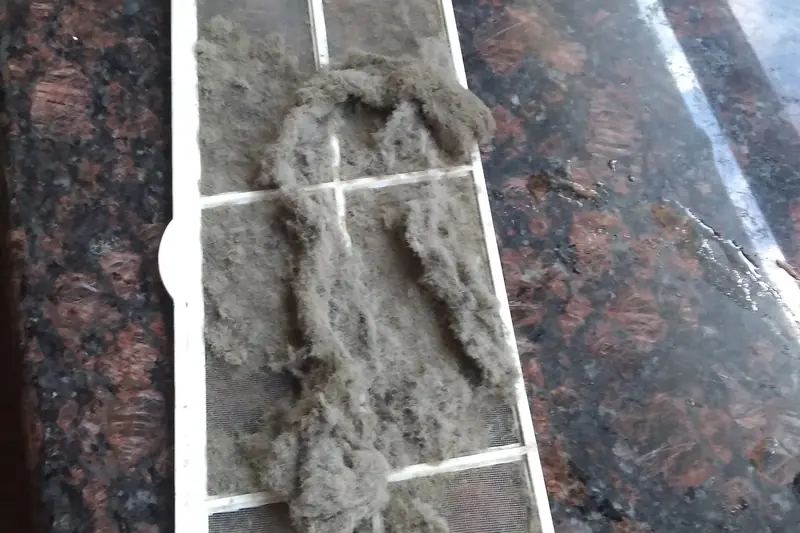
- Filter. Pull it and hold it to a light. The Minnesota Commerce Department warns that restricted airflow can freeze the evaporator coil. Replace it per the maintenance schedule.
- Registers and returns. Open every supply register and clear furniture, rugs and drapes off return grilles. A cracked or rusted register can be swapped for a new one; supply-house register and grille listings (PlumbingSupplyAndMore, owned by the people who run Swelter Almanac) show the common sizes.
- Outdoor unit. With power off at the outdoor disconnect, clear leaves and plants. The same Minnesota guide says the area around it "must be kept free of foliage."
- Breaker. If the outdoor unit is silent, check for a tripped breaker and reset it once. If it trips again, stop.
If you find ice on the indoor coil or the copper line, switch cooling off, set the fan to ON so moving air thaws it, and change the filter. Never chip or scrape the ice. If you're unsure, call a licensed technician.
When is it a real fault?
It is a real fault when the system cannot hold temperature on an ordinary day below your design temperature, or when a check turns up something only a technician can fix. Coil ice that comes back after a new filter points to low refrigerant charge or a restriction, according to an NREL measure guideline on A/C diagnostics. Low refrigerant means a leak, and under EPA's Section 608 rules only certified technicians can buy refrigerant for home systems.
Other signs: the outdoor fan or compressor is not running while the indoor fan blows, a breaker trips twice, or the supply air feels barely cool. ENERGY STAR's maintenance checklist puts coils, refrigerant charge and electrical connections on the contractor's list, noting that dirty coils reduce the system's ability to cool. Leaky ducts are a quieter culprit: ENERGY STAR says typical systems lose 20 to 30 percent of the air they move.
For an example of what a local company's A/C service page lists, see Central Plumbing HVAC's air conditioning page (Central Plumbing HVAC, owned by the people who run Swelter Almanac); it works in Bucks and Montgomery County, Pennsylvania. Elsewhere, look for a licensed company near you and ask for a written diagnosis.
How do you help the system on the worst days?
Cut the heat coming in so the system has less to remove. Close blinds on east windows in the morning and west windows after noon, run the oven and dryer early or late, and keep doors shut. Shade on the west side does the most work, according to USDA Forest Service research covered on the window shading page.
Pre-cool a few degrees before the peak if your utility has time-of-use rates, then let the house drift; the thermostat settings page has the numbers. Run ceiling fans in occupied rooms only. In humid areas, leave the fan on AUTO so the coil can drain.
Watch the people, not just the thermostat. Per the CDC, a fan can push body temperature up when a room passes 90°F, so move people to a cooled room or a cooling center instead.
Design numbers behind the limit
- 111°FMaricopa County 1% cooling design limitENERGY STAR
- 75°FManual J indoor design temperature, at 50% humidityDOE Building America
- 15%Most a system should exceed its calculated loadDOE Building America
- 20–30%Share of duct airflow typically lost to leaksENERGY STAR
How this page was put together
Sources here are ENERGY STAR's Design Temperature Limit Reference Guide (2019 edition, revised 2021), DOE Building America's HVAC sizing strategy guide (2012), NREL's A/C diagnostics measure guideline (2013), ENERGY STAR's maintenance checklist and duct-sealing page, the Minnesota Commerce Department's A/C maintenance sheet, EPA Section 608 rules, and the Arizona courts and City of Dallas rental pages, read in October 2026. Left out: any fixed "degrees below outside" figure for equipment, since no engineering source gives one, and any refrigerant or electrical steps beyond resetting a breaker once.
More questions
My A/C ran all day and the house is 82°F. Is it broken?
Not necessarily. If it is hotter than your county's design temperature, steady running with a slow climb is expected. If it does the same on a milder day, or the supply air is barely cool, have it checked.
Can a bigger A/C fix a house that won't stay cool?
Usually not. DOE Building America caps capacity at 15 percent over the calculated load, and ENERGY STAR says an oversized system cycles on and off too often to keep you comfortable. Fix duct leaks, shading and attic heat first.
Should the A/C run constantly in extreme heat?
On days above the design temperature, yes, that is normal. A system that runs nonstop on a mild day, or short-cycles every few minutes, has a problem worth a service call.
Why is the upstairs so much hotter?
Heat rises, attics bake, and the longest duct runs usually feed the top floor. The hot upstairs page covers dampers, returns and room units for that problem.
Can low refrigerant be topped up?
Not by a homeowner. Refrigerant does not get used up, so a low charge means a leak that a Section 608 certified technician should find and repair before recharging.
Does hosing the outdoor unit help on a hot day?
A gentle rinse of a dirty coil with the power off helps it shed heat, and Minnesota's Commerce Department lists periodic hosing as an owner task. Spraying a running unit to cool it is not a fix and puts water near live electrical parts.
Does the humidity affect how well the A/C keeps up?
Yes. In humid heat a share of the system's work goes into pulling moisture out, which is why humid-climate homes feel warm at the same thermostat reading.
Keep reading
Back to the Swelter Almanac front page